The Retention Problem in Local Services
The average local service business replaces 20–30% of its customer base every year. Some churn is unavoidable — people move, circumstances change. But a significant portion of customer loss is preventable with one simple intervention: reaching out at the right time with the right message.
Service history data makes this possible.
What Service History Tells You
Every completed service record contains the seeds of your next booking:
- Last service date: Add the typical service interval (annual HVAC tune-up, quarterly pest control, monthly cleaning) to get the next service due date.
- Service type: What did they have done? Are there related services you haven't offered them?
- Average spend: High-value customers deserve more personalized outreach, not just a generic email blast.
- Service frequency: A customer who books every 3 months is a high-frequency repeat buyer. A customer who booked once 18 months ago may be at-risk.
Building a Retention Dashboard
You don't need analytics software. A Google Sheets dashboard built on your service history export works fine:
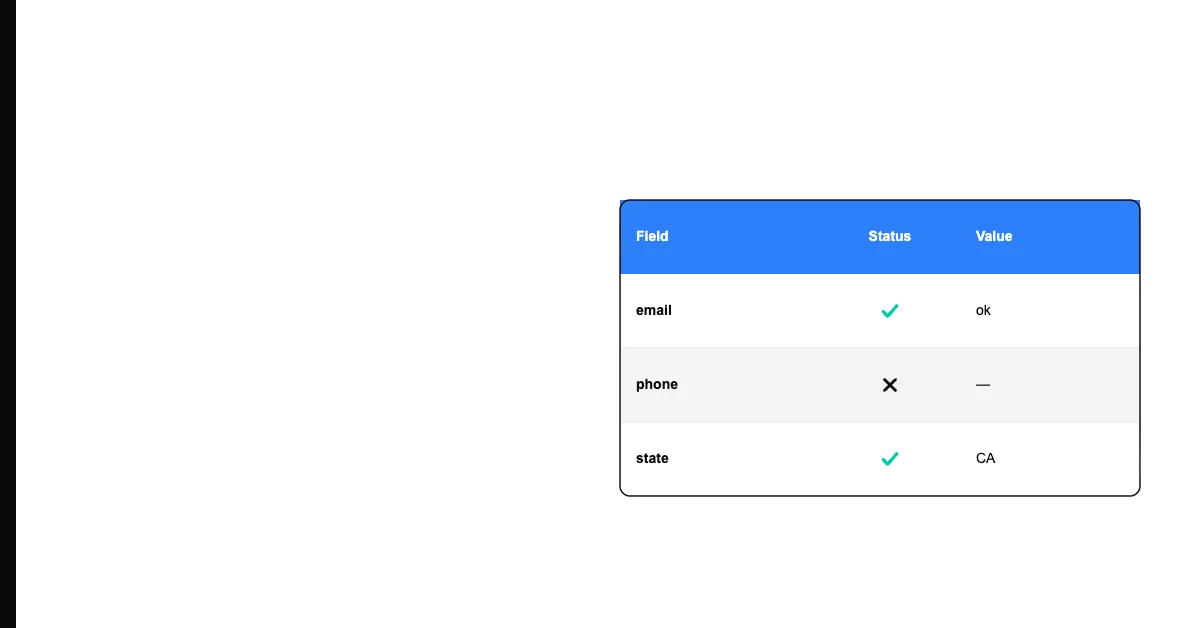
Sohovi gives you a full quality report on any spreadsheet in seconds — upload your file and see exactly what needs fixing.
Column A: Customer name Column B: Last service date Column C: Service type Column D: Next due date (= Last service date + typical interval) Column E: Days until due (= Next due date – TODAY()) Column F: Status (calculated: if Days until due < 0, "Overdue"; if < 30, "Due Soon"; else "OK")
Sort by Column F. Your "Overdue" customers are your highest-priority outreach list.
The Retention Outreach Sequence
30 days before due date: "Your annual [service] is coming up — book now before our schedule fills up."
On the due date: "Your [service] is due today. Here's a link to book."
30 days after due date (if not booked): "We haven't seen you in a while — is there anything we can help with?"
90 days after due date (if still not booked): Personal phone call from the owner or a senior team member. This is a lapsed customer intervention — worth the personal touch.
Segmenting by Service Type
Don't treat all customers the same. Segment your outreach:
- HVAC customers get different messaging than pest control customers
- Recurring customers (monthly/quarterly) get a different sequence than annual customers
- High-value customers (spend $500+ per year) get a personal call, not just an email
Segment-specific messaging converts better because it's relevant. A plumber sending a "time for your annual tune-up" email to a customer who called for an emergency repair will seem out of touch.
Building This on Clean Data
The retention dashboard above assumes every customer record has a reliable last-service date and a consistent service-type label — in practice, that's rarely true without a cleanup pass first. Export your service history and check it in Sohovi for missing dates, blank service types, and duplicate customer entries before you build the dashboard, or your "overdue" list will be wrong in both directions. This pairs naturally with setting up your CRM correctly in the first place, so the data stays clean going forward.
Sohovi automatically finds every duplicate in your dataset — including near-matches — and shows you exactly which rows are affected.