Referrals Are Already Happening — You're Just Not Tracking Them
Word of mouth drives 20–40% of new customers for most local service businesses. Most of that referral activity is invisible: a neighbor mentions your name, a recommendation is given, and a new customer calls. You have no idea who to thank.
A structured referral program makes referrals visible, trackable, and incentivized — turning a passive revenue stream into an active one.
The Data Foundation for a Referral Program
Before launching a referral program, your customer data needs to be clean enough to support it:
Required fields:
- Customer first name and email (to send referral invitations)
- Referral source field (to track who referred whom)
- Referral status (pending, converted, rewarded)
Nice to have:
- Customer lifetime value (to prioritize who gets a referral invitation first)
- Service type (to tailor the referral message)
- Number of referrals given (to identify your top advocates)
Stop sending campaigns to bad data — Sohovi validates your list before you hit send — try Sohovi free.
If these fields don't exist in your CRM, add them before launch.
Designing the Tracking System
For a referral program to be measurable, you need a way to connect a new customer to the person who referred them. Options:
Unique referral codes: Each customer gets a code (SMITH50, JONES25) that the new customer mentions when booking. Works for phone bookings.
Referral links: Each customer gets a unique URL that pre-populates the referrer's ID when a new customer books online. Works for online bookings.
Ask at intake: "Who referred you?" with a field to capture the name. Works when codes/links aren't practical. Requires someone to manually verify the referral.
Store the referral connection in your CRM: new customer record has a "Referred by: [Customer ID]" field. This makes it queryable — you can pull a list of all referred customers, all referrers, and all outstanding rewards.
Sohovi finds gaps, duplicates, and format errors in your CRM data — so your team is working from records they can trust.
The Reward Structure
Keep it simple. Complexity kills participation:
- For the referrer: A credit on their next service, or a gift card. Cash is most universally valued.
- For the new customer: A discount on their first service.
- When rewards are given: After the new customer's first completed and paid job — not at booking, to prevent abuse.
Measuring Your Referral Program
Monthly metrics:
- Referrals generated (unique new customers linked to a referrer)
- Conversion rate (referrals that booked / invitations sent)
- Cost per referred customer (total rewards paid / new customers acquired)
- Compare to cost per customer from paid channels
Sohovi gives you the data quality picture you need to make the case for fixing it — and to track improvement over time.
Most local service businesses find that referred customers have higher lifetime value and lower acquisition cost than any other channel. The data proves what you probably already suspected.
Your Referral Data Is Only as Good as Your Customer Data
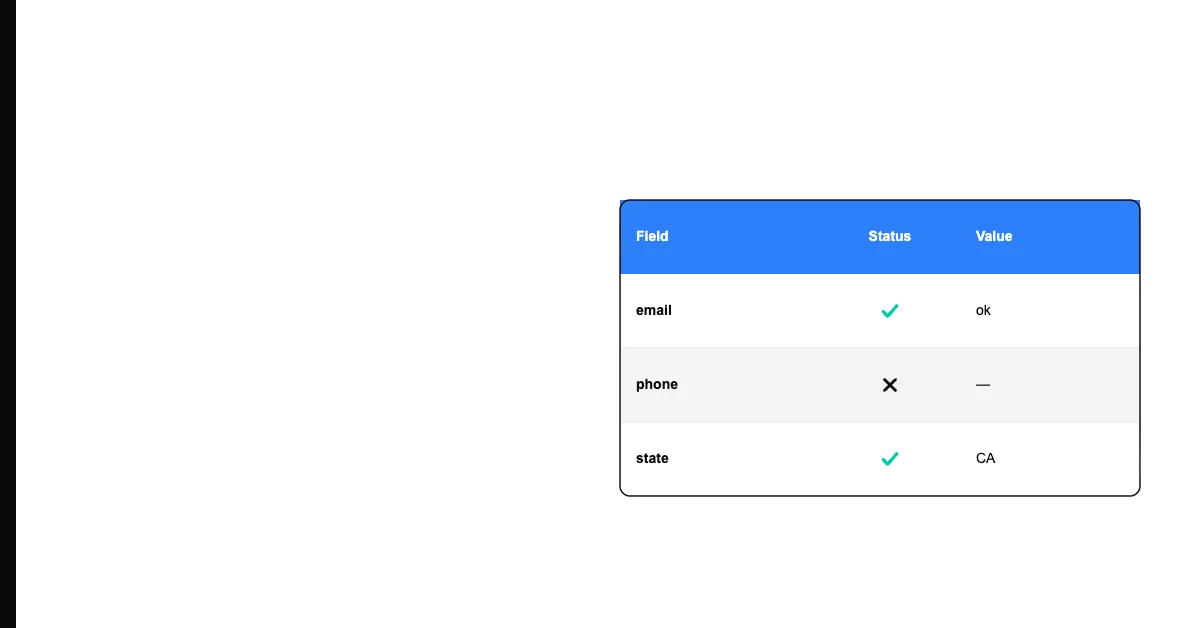
A referral program breaks quietly when the underlying customer records are messy — duplicate entries make a referrer's history look incomplete, and missing emails mean referral invitations never go out. Before launch, run your customer list through Sohovi to check completeness on the exact fields (name, email, referral source) the program depends on. The same clean data also strengthens review request timing and personalization, since both rely on accurate, complete customer records.