Every order, payment, and shipment that flows through your systems generates transaction records. When those records are accurate, your operations run smoothly and your financial reports are trustworthy. When they're wrong, the errors compound — through inventory systems, accounting records, and customer-facing statements — until someone notices something doesn't add up.
What Makes Transactional Data Vulnerable to Quality Problems
Transactional data has unique quality challenges compared to reference data (customer records, product catalogs) because:
Volume: Transactions are high-frequency. A busy e-commerce site processes thousands of orders per day. At that volume, even a 0.1% error rate produces thousands of wrong records.
System touchpoints: A single order touches multiple systems — e-commerce platform, OMS, WMS, accounting, shipping carrier, customer service. Each handoff is a potential quality failure point.
Time sensitivity: Transaction errors have financial implications that compound over time. A duplicate invoice discovered 90 days after the fact requires significantly more effort to resolve than one caught same-day.
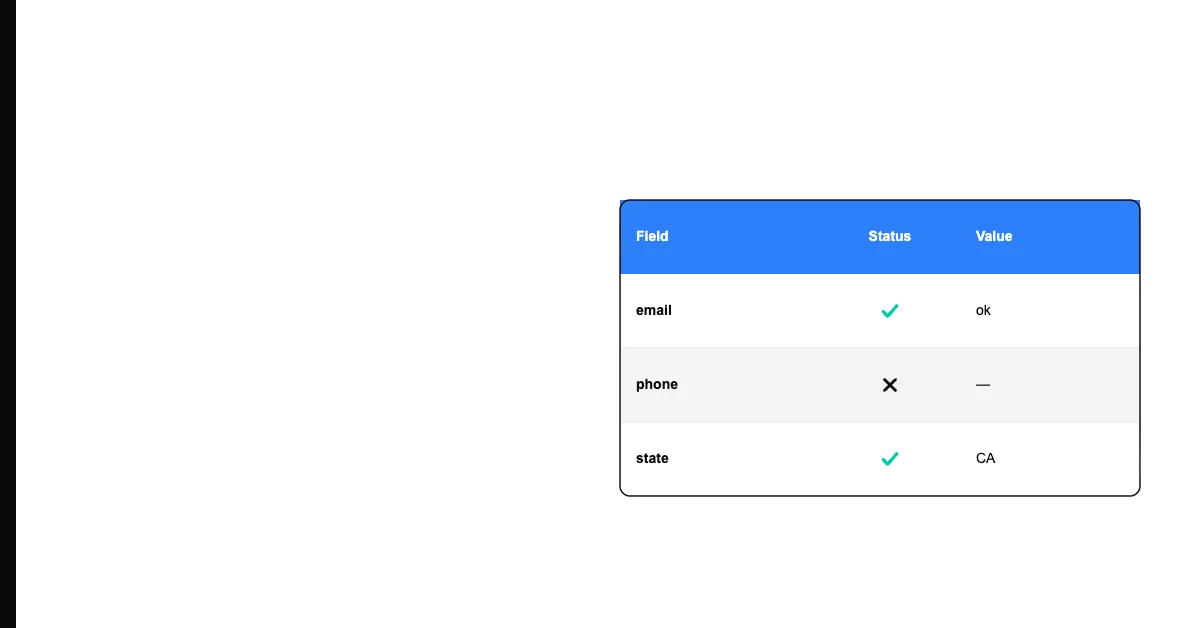
Sohovi automatically finds every duplicate in your dataset — including near-matches — and shows you exactly which rows are affected.
The Most Common Transactional Data Quality Problems
Duplicate orders/transactions: An order submitted twice due to a payment error retry, a bank statement imported when transactions were already manually entered, a system integration that double-posts transactions.
Wrong amounts: Prices that include the wrong discount, tax calculations applied incorrectly, amounts entered with transposed digits.
Wrong dates: Transactions dated in the wrong period — especially close-period issues where a transaction meant for December gets dated in January.
Missing line items: An order record exists but the line-item detail (which products, which quantities) is missing or incomplete.
Misattributed transactions: An order associated with the wrong customer account, revenue credited to the wrong sales region, a payment applied to the wrong outstanding invoice.
Frequently Asked Questions
Q: What is transactional data quality? Transactional data quality refers to the accuracy, completeness, and consistency of records that capture business events — orders, payments, shipments, returns. When transaction records are wrong, every downstream system and report that depends on them is wrong too.
Q: How do duplicate transactions enter transaction systems? Common sources: payment processing errors that trigger order retries (customer clicks "pay" twice), bank feed imports that overlap with manually entered transactions, system integrations that post the same event to multiple systems, and batch import files that include already-processed records.
Q: What is the most important check to run on transactional data before financial close? Duplicate transaction detection: same amount, same vendor/customer, close dates. This catches the most common and most financially impactful error type before it enters closed books where correction is more complex.
Q: How do period-end date errors affect financial reporting? Transactions dated in the wrong period shift revenue and expenses between periods, making period-over-period comparisons unreliable. If an error crosses a fiscal year boundary, it requires restatement — a significant compliance and credibility concern.
Q: What is matching in accounts payable and how does it protect data quality? Three-way matching compares purchase order, receiving record, and invoice to confirm that what was ordered, received, and billed are consistent. Discrepancies trigger holds for investigation before payment. This catches both data quality errors (wrong amounts, duplicate invoices) and potential fraud.
Q: How should transactional data quality be monitored? At minimum: daily reconciliation between source systems (e-commerce platform, billing system) and accounting records; weekly duplicate check on recent transactions; monthly revenue reconciliation against CRM pipeline. Alert thresholds for anomalous transaction volumes or amounts.
Q: What is transaction atomicity and how does it relate to data quality? Transaction atomicity means that a transaction either completes entirely or not at all — it's all-or-nothing. In database terms, this prevents partial transaction states where some records are updated and others aren't. Systems that don't guarantee atomicity can produce incomplete transaction records that look complete.
Q: How does return and refund processing affect transactional data quality? Returns and refunds create offsetting transactions that must be correctly linked to the original transaction. When the link is broken — a return record that doesn't reference the original order — inventory, revenue recognition, and customer account balances all become inaccurate.
Q: What is idempotency and why does it matter for transaction systems? Idempotency means that performing the same operation multiple times produces the same result as performing it once. In transaction systems, idempotency prevents the same event from creating multiple transaction records — a critical safeguard against the most common source of transaction duplicates.
Q: How often should transaction data be audited? A lightweight daily check (volume within expected range, no obvious anomalies) is the minimum. A weekly duplicate check catches most common errors early. A monthly full reconciliation confirms running totals match across all systems.
Transaction data accuracy is the bedrock of financial reporting, inventory management, and customer trust. Check for duplicates daily, reconcile systems weekly, and investigate anomalies before they compound.