A financial statement is only as accurate as the data underneath it. Duplicate transactions inflate revenue and expenses. Miscoded entries distort cost center reporting. Stale pricing data corrupts margin calculations. The numbers look right. The reports format correctly. But they're wrong — and the decisions made from them are wrong too.
The Specific Data Quality Challenges of Financial Data
Duplicate transactions: The same invoice processed twice. The same payroll entry double-booked. The same bank transaction manually entered and then automatically imported from a bank feed. Duplicates are the most common and most immediately impactful financial data quality failure.
Misclassification: The same type of expense booked to different GL accounts in different periods. "Consultant fees" recorded as "Professional Services" in Q1 and "Contractor Costs" in Q2. This isn't wrong individually — but it makes period-over-period comparison unreliable.
Sohovi gives you the data quality picture you need to make the case for fixing it — and to track improvement over time.
Currency and numeric format inconsistencies: Dollar amounts stored with currency symbols that make them text strings rather than numbers. Numbers formatted with commas that some systems interpret as decimal separators. Revenue figures in different currencies in the same column without conversion.
Missing fields: Transactions without vendor names, without GL codes, without project assignments, without tax classifications. Each missing field limits the ways the transaction can be analyzed or reported.
Date accuracy: Transactions recorded in the wrong period — a December expense entered with a January date, distorting monthly and quarterly comparisons. Close-period transactions that should be in one fiscal period but land in another due to timezone issues or delayed entry.
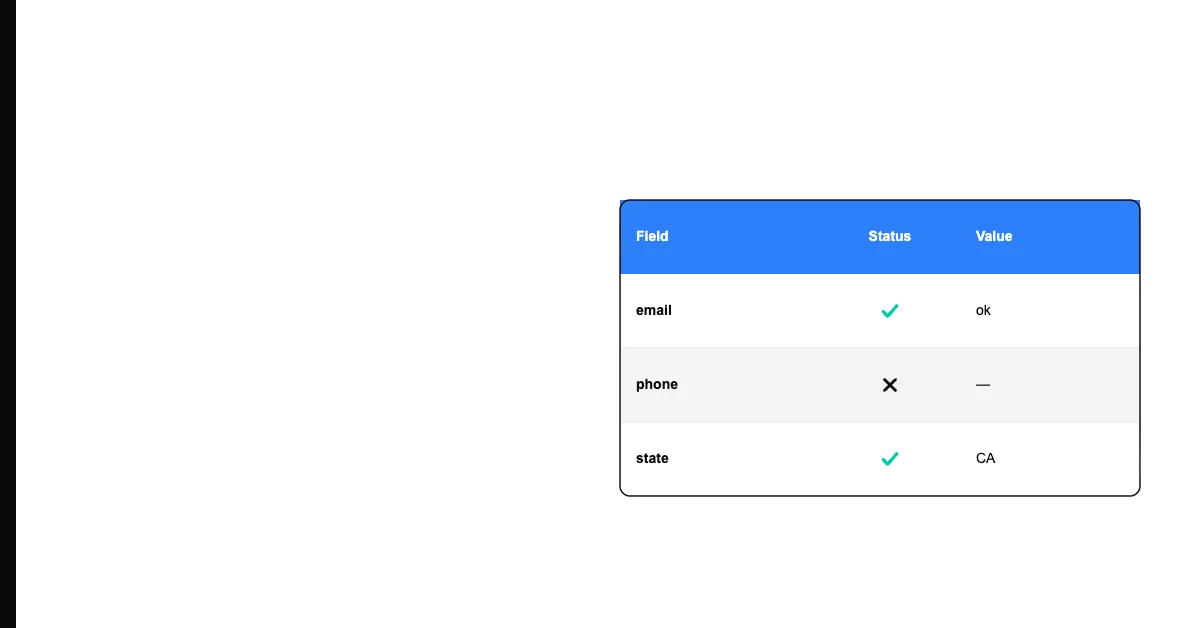
Sohovi scores your dataset against your own accuracy standards and highlights the columns and rows where values fall outside expected ranges.
Frequently Asked Questions
Q: What are the most common financial data quality problems? Duplicate transactions, misclassified expenses (wrong GL codes), currency and numeric format inconsistencies, missing required fields (vendor, GL code, project), and date period errors are the most common. Each creates specific reconciliation and reporting problems.
Q: How do duplicate transactions enter financial systems? Common sources: manual entry of a transaction that was also imported from a bank feed, an AP clerk processing the same invoice twice, a system integration that double-posts from a billing system to an accounting system, and import files that include records already in the system.
Q: What is the most effective way to detect financial data quality problems? Pre-close checks: before closing any accounting period, run a duplicate transaction check (same amount, same vendor, close dates), completeness check for required coding fields, and reconciliation of source system totals to the accounting system.
Q: How does GL code inconsistency affect financial reporting? When the same expense type is coded to different GL accounts in different periods, trend analysis produces misleading results. A "professional services" spend that shows up under three different account codes across three quarters looks like it's been replaced by different types of spending rather than being the same ongoing cost.
Q: What is the impact of period-end date errors in financial records? Period-end errors — transactions dated in the wrong accounting period — cause period comparisons to be inaccurate and cumulative totals to be temporarily wrong. They're particularly problematic during audit if the error crosses a fiscal year boundary.
Q: How should financial records handle multiple currencies? Store the original currency and amount as entered, plus a normalized amount in a base currency at the exchange rate on the transaction date. Never overwrite the original currency data. Mark the exchange rate source and date for reproducibility.
Q: What is financial data reconciliation and why is it a data quality tool? Reconciliation compares two data sources that should agree — bank statement vs. accounting records, source system totals vs. data warehouse totals. Discrepancies indicate data quality failures: missing transactions, duplicates, coding errors, or timing differences. Regular reconciliation catches quality problems before they compound.
Q: How does data quality affect financial audit readiness? Auditors test whether records accurately represent economic activity. Data quality failures — duplicate transactions, unsupported codes, inconsistent classification — create audit findings that require management response. Strong data quality practices reduce audit risk by ensuring records are accurate and consistent before auditors see them.
Q: What is the role of a chart of accounts in financial data quality? The chart of accounts is the reference data that financial transactions are coded against. When it has quality problems — inactive accounts still available for coding, duplicate codes for the same purpose, ambiguous category names — transactions get coded inconsistently. Maintaining a clean chart of accounts is foundational financial data quality.
Q: What is the difference between a financial data quality issue and a financial fraud indicator? Data quality issues are usually unintentional — errors from double-entry, miscoding, format problems. Financial fraud involves intentional manipulation. The same data patterns (duplicate transactions, misclassified entries) can indicate either. Strong data quality controls that catch errors also catch fraud indicators — preventing both inadvertent errors and intentional manipulation.
Financial data quality is not optional — it's the foundation of every report, audit, and decision your organization makes from financial records. Duplicate checks, reconciliation, and classification consistency are the three most impactful controls.