The Problem With 'How Did You Hear About Us?'
When you ask "How did you hear about us?" at booking, customers give you their best guess — not necessarily the accurate answer. "Google" could mean Google Ads, organic search, Google Maps, or a friend who found you on Google. These are very different marketing investments.
Lead source tracking is only useful if it's accurate. And for most local service businesses, it isn't.
What Accurate Lead Source Tracking Requires
For digital channels:
- Unique phone numbers per channel (Google Ads number, Google My Business number, Yelp number). When the customer calls, the number tells you the source.
- UTM parameters on all website URLs in your digital ads and email campaigns
- A booking form field that captures which channel the user came from (auto-populated by UTM, if possible)
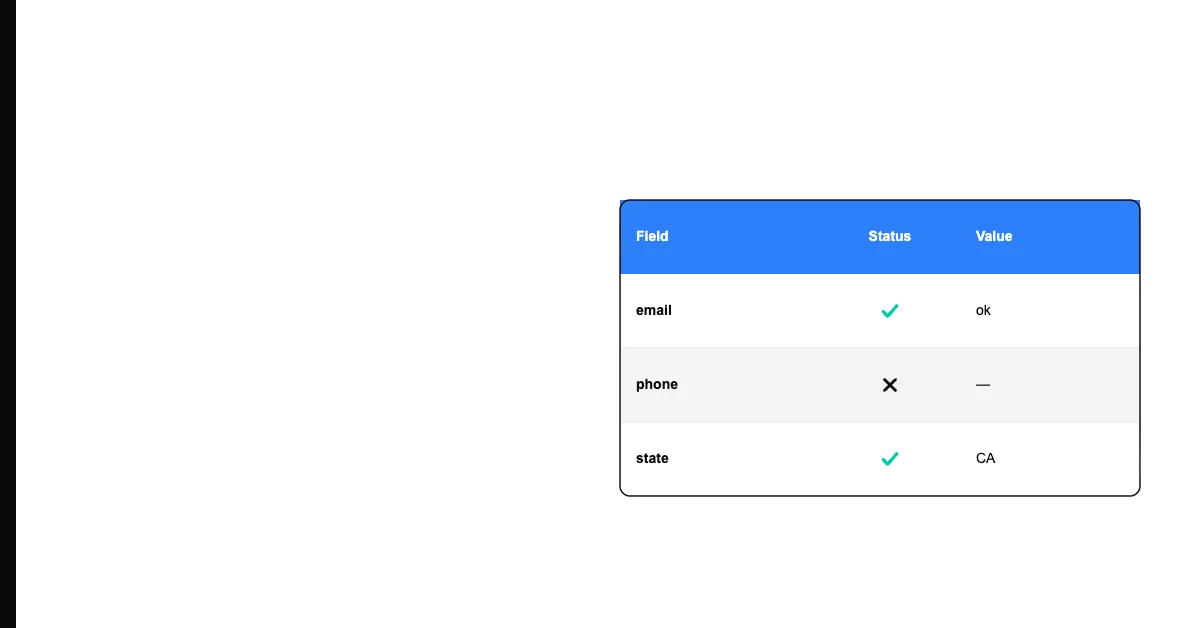
Sohovi validates your email list for invalid formats, duplicates, and missing fields before you send — protecting your sender reputation.
For offline channels:
- A consistent scripted question asked at first contact, with a defined set of acceptable answers
- A field in your CRM or scheduling tool that is required before a lead can be saved
The defined answer set (make it a dropdown, not free text):
- Google search (organic)
- Google Ads
- Google Maps / Google Business Profile
- Yelp
- Facebook / Instagram
- Nextdoor
- Word of mouth / referral
- Previous customer
- Direct mail / flyer
- Other (with text field)
The Lead Source Data Audit
After 3 months of consistently capturing lead source, run this report:
- How many leads came from each source?
- What % converted to a booked job?
- What was the average job value per source?
- What's the cost per acquired customer by source (for paid channels)?
Sohovi gives you the data quality picture you need to make the case for fixing it — and to track improvement over time.
The combination of conversion rate and job value by source tells you where your marketing dollar works hardest — and where it doesn't.
What Most Local Service Businesses Discover
When local service businesses run this analysis honestly, they typically find:
- Google Maps / Google Business Profile drives more leads than paid ads (and costs nothing beyond maintaining the profile)
- Nextdoor is underinvested — high conversion, low cost
- One or two paid channels are unprofitable when cost-per-acquisition is calculated honestly
- Referrals convert at the highest rate but are tracked inconsistently
The data doesn't tell you what to do — it tells you what's actually happening so you can make decisions based on reality, not assumptions.
Clean Lead Data Before You Trust the Report
Lead source analysis is easy to get wrong if duplicate leads are being double-counted or the source field has inconsistent free-text entries mixed in with your dropdown values. Before drawing conclusions about which channel performs best, export your leads and profile them in Sohovi — it's the fastest way to catch a messy source field or duplicate lead record before it skews your channel comparison. The same discipline matters for tracking referrals specifically, since referral data is one of the easiest lead sources to undercount.
Sohovi automatically finds every duplicate in your dataset — including near-matches — and shows you exactly which rows are affected.