You've discovered that your data has problems. Now comes the question that derails more data quality programs than any technical issue: who is actually responsible for fixing it — and for keeping it fixed?
The default answer — "IT is responsible for data quality" — is wrong. IT can build systems and run tools, but data quality is ultimately owned by the people and teams who create, use, and manage data as part of their daily work.
In this guide
- Why unclear ownership is the root cause of persistent data quality problems
- The key roles in a data quality accountability structure
- How to assign ownership without creating new bureaucracy
- What each role is actually responsible for
Why "Everyone Is Responsible" Means Nobody Is
The instinct to make data quality a shared company-wide responsibility sounds right. In practice, it means no single person has the authority to act, the accountability to be measured, or the motivation to prioritize quality over their primary job.
Effective data quality accountability requires specific owners for specific datasets — people who know they'll be asked about quality when it degrades and who have the authority to require fixes.
The Key Roles in Data Quality Accountability
Data Producer
Who they are: Anyone who creates or enters data — sales reps logging CRM records, warehouse staff entering inventory counts, customer service teams updating account records.
Sohovi validates your dataset before it enters the warehouse — catching format errors, nulls, and duplicates at the source.
What they're responsible for:
- Entering data accurately and completely according to defined standards
- Following naming conventions, required field rules, and format standards
- Flagging when the system makes entering quality data difficult (form design problems, ambiguous fields)
The principle: Producers are responsible for quality at the point of creation. Fixing bad data downstream is 10x more expensive than entering it correctly in the first place.
Data Owner
Who they are: The team or person who has primary business responsibility for a specific data domain — the VP of Sales for customer data, the Head of Ops for inventory data, the CMO for campaign data.
What they're responsible for:
- Setting quality standards for their domain: what does "good" customer data look like?
- Being accountable for the quality metrics of their data domain
- Authorizing decisions about how data in their domain is managed or changed
- Escalating systemic quality problems that can't be fixed at the producer level
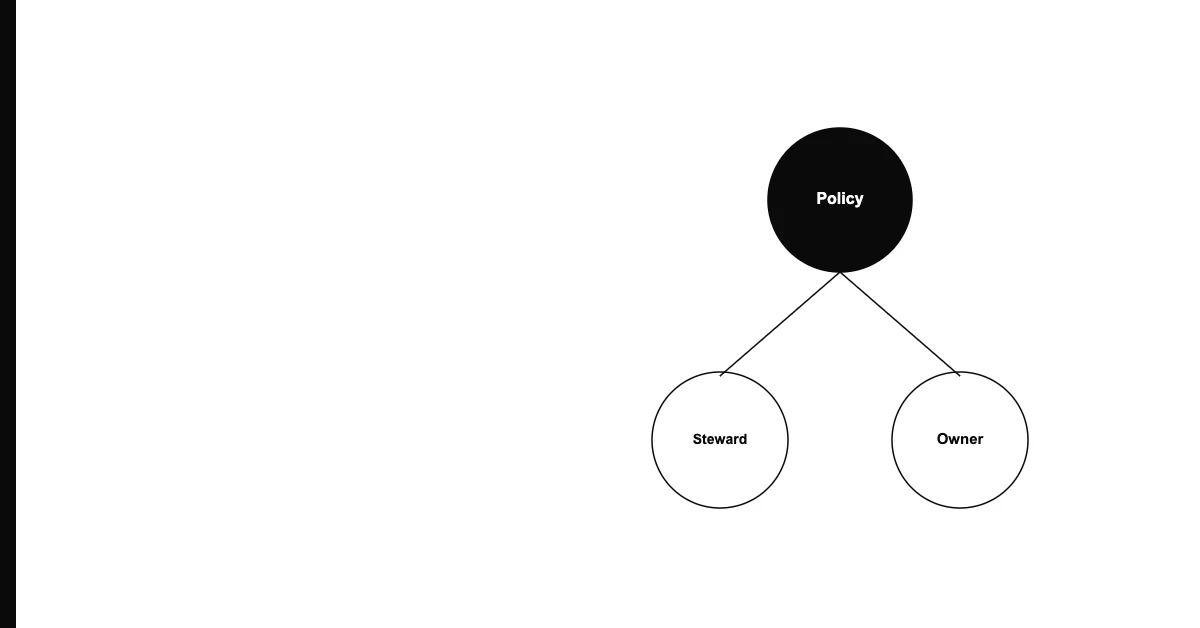
The principle: Data owners have business authority and accountability. They're not the ones fixing records — they're the ones ensuring the systems and processes exist to maintain quality.
Data Steward
Who they are: A day-to-day operational owner of data quality within a specific domain. Often a senior analyst, operations manager, or team lead who has detailed knowledge of the data and its business context.
What they're responsible for:
- Monitoring data quality metrics regularly
- Investigating quality failures when they occur
- Defining and documenting data standards for their domain
- Coordinating with data producers to fix and prevent quality problems
- Reviewing data before it's used in major decisions or migrations
Sohovi tracks quality trends across runs and alerts you when a metric — null rate, duplicate count, score — moves outside its normal range.
The principle: Data stewards do the operational work of quality maintenance. Data owners set the direction; stewards execute it.
Data Consumer
Who they are: Analysts, report builders, dashboards users, executives reading reports — anyone who uses data to make decisions or create outputs.
What they're responsible for:
- Flagging data problems when they notice them (not assuming someone else will catch it)
- Not using data they believe is unreliable without flagging the uncertainty
- Providing feedback to stewards and owners about quality issues that affect their work
Sohovi shows you exactly what is wrong with your data — completeness gaps, type mismatches, duplicates — in one clear report.
The principle: Consumers are the last line of detection before bad data affects decisions. They're not responsible for fixing quality, but they are responsible for not silently using data they know is wrong.
Data Engineer / IT
Who they are: The team that builds and maintains the systems, pipelines, and tools that move and store data.
What they're responsible for:
- Building systems that enforce quality at entry: required fields, validation rules, format constraints
- Maintaining pipelines that don't introduce quality problems in transit
- Providing the infrastructure for data quality monitoring and reporting
- Implementing fixes when quality problems are caused by system behavior
The principle: Engineers are responsible for quality in the systems they build, not in the data business users create. They implement the technical guardrails; they don't own the data.
Tools like Sohovi give data stewards and owners an accessible way to check the quality of their data without waiting on engineering — upload your CSV and get a quality report in minutes.
Chief Data Officer (CDO) or Data Leader
Who they are: The senior leader responsible for data strategy across the organization. Not every company has this role; in smaller organizations, a VP of Analytics or the CTO may fill it.
What they're responsible for:
- Defining the overall data quality strategy and standards
- Ensuring data quality resources are funded and staffed
- Resolving ownership disputes across domains
- Reporting on organizational data health to the executive team
The principle: The CDO sets organizational direction and resolves conflicts. They don't manage individual datasets — that's what stewards are for.
Assigning Ownership Without Creating Bureaucracy
You don't need all of these roles formally defined to make ownership work. The minimum viable ownership structure:
- For each key data entity (contacts, orders, products, accounts), identify the team that produces the most records in it
- Name one person on that team as the data steward — the go-to person for quality questions
- Confirm that team's manager is the data owner — accountable for quality metrics
- Make this visible: document it somewhere people can find it
Start with your three most critical datasets — the ones whose quality problems have the most business impact. Assign ownership there first. Expand as the practice matures.
Frequently Asked Questions
Q: Should data quality ownership be separate from IT? Yes, in most cases. IT is responsible for the technical systems that store and move data, but the business teams that create and use data are responsible for its content and accuracy. Placing data quality ownership entirely in IT creates a mismatch: IT doesn't have visibility into business context, and business teams assume IT will handle it.
Q: What happens when data quality ownership crosses multiple teams? This is common — a customer record might be created by Sales, updated by Customer Success, and consumed by Finance. In these cases, designate a primary owner (the team that creates the record initially) and define clear handoff standards. A data governance council or committee can mediate disputes between owners.
Q: How do you hold data producers accountable without creating a punitive culture? Focus on systems before individuals. If data quality is poor, first ask whether the system makes it easy to enter data correctly. Fix form design, required field enforcement, and validation before targeting individual behavior. When individual behavior is the issue, address it through coaching and clear standards, not blame.
Q: Is it possible to have too many data owners? Yes. If every team and every person feels they own data quality, ownership becomes diffuse and accountability disappears. Keep ownership concentrated: one steward, one owner per domain. Others can be stakeholders, but accountability needs to be singular.
Q: What does a data steward actually do week-to-week? In practice: review quality dashboards, investigate flagged anomalies, coordinate with data producers to fix specific records or systemic issues, document updates to data standards, and communicate quality status to the data owner. In larger organizations, this is a full-time role. In smaller ones, it's a part-time responsibility alongside other work.
Q: How do data ownership and data privacy relate? They're related but separate concerns. Data ownership addresses who is accountable for quality; data privacy addresses who has the right to access, process, and delete personal data. In practice, data owners are often also responsible for ensuring their domain complies with privacy policies, but they work with legal and compliance teams rather than making privacy decisions unilaterally.
Q: Should data ownership be documented formally? Yes. An informal understanding of who owns what data is better than nothing, but it breaks down during team changes and organizational growth. A simple data ownership matrix — listing key datasets, their stewards, and their owners — is worth creating and maintaining.
Q: How do you get busy managers to take data ownership seriously? Make the quality metrics visible to them and connected to outcomes they care about. If a sales manager can see that 18% of their team's CRM contacts are missing phone numbers, and that correlates with lower call connect rates, data ownership becomes a business priority rather than an administrative one.
Q: What's the difference between a data steward and a data owner? A data owner has the authority and accountability for a data domain — they make decisions and are responsible for quality outcomes. A data steward does the operational day-to-day work of maintaining quality in that domain. Owners set direction; stewards execute it. In small organizations, one person often fills both roles.
Q: How does data ownership change as a company scales? Early-stage companies often have informal ownership — whoever created the system owns the data. As companies scale, informal ownership breaks down and formal structures become necessary. The transition point is usually when data crosses team boundaries and informal coordination fails.
If you want to start tracking the quality of your team's data, Sohovi gives non-technical data owners and stewards an instant quality view — upload your data file and get a report on completeness, duplicates, and anomalies. Try it free — no technical setup required.