The data quality approaches that work at 20 people stop working at 200 — not because the principles change, but because the volume, complexity, and organizational coordination required all multiply. Companies that don't adapt their quality practices as they grow end up with data debt that compounds faster than they can pay it down.
Scaling data quality isn't about doing the same things harder. It's about systematizing what was done informally, automating what was done manually, and distributing what was done centrally.
In this guide
- Why data quality degrades during rapid growth
- The four systems that need to evolve as you scale
- How to maintain quality without a proportional headcount increase
- Organizational changes that prevent quality from becoming a scaling bottleneck
Why Data Quality Degrades at Scale
More people entering data: At 10 people, everyone knows the standards because they were set by someone in the room. At 100, new hires learn from whoever onboards them — and if standards aren't documented and enforced, each person brings their own interpretation.
More systems: Each new tool or integration introduces another point where data can diverge, be transformed incorrectly, or lose fidelity in transit. A company with 3 systems has 3 points of potential quality degradation. A company with 15 systems has many more.
Faster data volume growth: More customers, more transactions, more events. Quality issues that were low-volume and manageable become high-volume and structural.
Sohovi profiles your datasets for quality issues in minutes — see what's broken before it breaks your pipeline — try Sohovi free.
Organizational fragmentation: As teams grow and specialize, the informal coordination that maintained shared data standards breaks down. Sales and Marketing stop naturally sharing context about customer definitions. Quality issues cross organizational boundaries and nobody claims ownership.
System 1: Entry Standards and Validation
At small scale: Someone tells new hires how to enter data. It mostly works because the person who knows the standards is always around.
At scale: Standards must be codified, built into systems, and enforced automatically where possible.
What to do:
- Convert verbal standards into written documentation — required fields, format expectations, naming conventions
- Configure your CRM, ERP, or data entry systems to enforce required fields and use picklists for categorical data
- Add format validation where possible (email format checking, phone number normalization, address standardization)
- Build data entry standards into your onboarding checklist — every new hire who touches operational data should know the standards before they start
Sohovi lets you set up validation rules for any column and instantly see which rows fall outside them — no code or SQL required.
The goal: make entering data correctly easier than entering it incorrectly. When the system enforces standards, you don't depend on individuals remembering them.
System 2: Data Ownership
At small scale: One person informally owns the CRM. Another owns the product database. Everyone knows who to ask.
At scale: Informal ownership breaks down as teams grow, reporting structures change, and the people who originally "owned" datasets move on.
What to do:
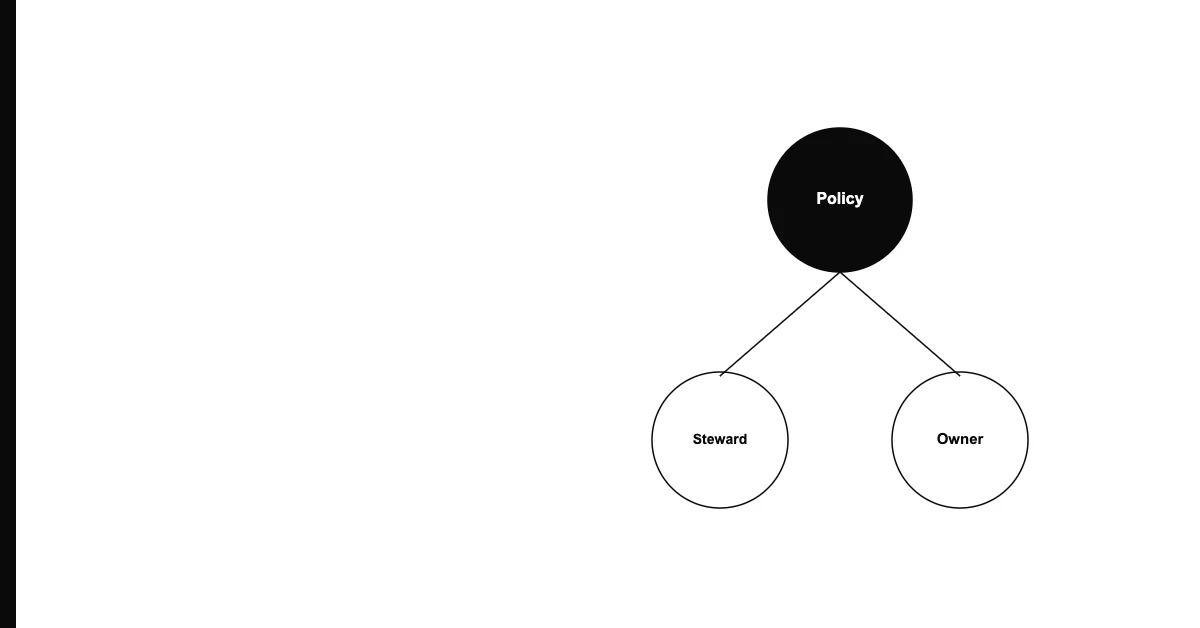
- Create an explicit data ownership matrix — for each critical dataset, a named steward and a named owner
- Make ownership changes part of offboarding when key people leave
- Assign ownership of new data domains when new systems are added
- Review the ownership matrix quarterly — stale assignments are as bad as no assignments
Ownership is what prevents the "everyone's responsible, therefore nobody's responsible" failure mode that becomes more common as organizations grow.
System 3: Measurement and Monitoring
At small scale: Someone runs an ad-hoc query when something seems wrong.
At scale: Ad hoc measurement is too slow and too inconsistent. By the time a problem is detected manually, it's often been building for months.
What to do:
- Define the 5–10 quality metrics that matter most for each critical dataset
- Schedule automated quality checks — weekly for high-stakes datasets, monthly for stable ones
- Set threshold-based alerts: if email validity drops below X%, notify the owner automatically
- Build quality metrics into the same dashboards where operational metrics live — not in a separate data quality system that nobody visits
Sohovi applies your data quality rules automatically across the whole dataset and highlights every violation — so nothing slips through.
Tools like Sohovi complement automated monitoring for teams that still manage data in files — quick quality profiles of CSV exports that give data owners a snapshot without waiting on engineering.
System 4: Remediation Processes
At small scale: When bad data is found, the person who found it fixes it (or asks the one person who knows how).
At scale: Remediation without a process creates bottlenecks and inconsistent fixes. Different people fixing the same type of problem in different ways makes the problem worse.
What to do:
- Define a remediation workflow for common quality failure types: who is notified, who investigates, who authorizes the fix, how the fix is verified
- Distinguish between record-level fixes (individual corrections that can be delegated) and systemic fixes (changes to how data is entered or processed that require coordination)
- Track remediation time as a metric — if the average time to fix a known quality issue is increasing, the process is a bottleneck
The Automation Imperative at Scale
Manual quality processes don't scale linearly with data volume. A team that can manually review 1,000 records can't manually review 100,000 — and you don't solve this by hiring 100x the reviewers.
Automation at scale focuses on:
- Automated ingestion validation: Every incoming data batch is validated against defined rules before it enters the system — no human review required for passing batches
- Continuous quality monitoring: Metrics are collected automatically and surfaced to owners without anyone running a report
- Triggered alerts: Humans are only involved when automated checks flag something — not on a regular schedule for data that's meeting standards
The goal of automation isn't to remove humans from data quality — it's to ensure humans are spending their time on problems that require judgment, not on reviewing data that's already fine.
Organizational Changes That Support Scale
Formalize the data steward role: As teams grow, the data steward should become a recognized part of each domain team's structure — not an informal additional responsibility.
Create cross-team coordination: When data quality issues cross team boundaries, you need a mechanism to coordinate — a data council, a regular cross-team data review, or at minimum a clear escalation path.
Include quality in hiring: Teams that produce a lot of data should be hiring people who understand data quality expectations. Include data quality awareness in job descriptions and onboarding.
Frequently Asked Questions
Q: At what company size does data quality management become a dedicated function? Organizations typically create dedicated data quality or data governance roles around 200–300 employees, when the complexity of cross-team coordination and the volume of data both exceed what can be managed informally. Before that point, distributed stewardship (business teams owning their domain's quality) is usually sufficient.
Q: How do you prevent data quality degradation during a rapid hiring phase? Double down on onboarding. The period when many new hires are joining is when data entry standards are most at risk — new people don't know the norms. Make data quality standards explicit, documented, and part of the formal onboarding process rather than relying on osmosis.
Q: Can you maintain high data quality without a dedicated data team? Yes, up to a certain scale. Distributed ownership (data stewards embedded in business teams) and well-configured systems (validation rules, required fields, picklists) can maintain quality without a centralized data team. A centralized team becomes necessary when cross-domain coordination and technical data management complexity exceed what embedded stewards can handle.
Q: How do you handle data quality when expanding into new markets or regions? New markets introduce new data patterns — different phone number formats, address structures, company naming conventions, legal entity types. Define the additional standards for each new market before you start operating there, and configure your systems to support them. Retrofitting standards after data has been collected is always more expensive.
Q: What's the biggest data quality risk when a company makes an acquisition? Merging incompatible definitions of shared entities — especially customers. If both companies have a "customer" table with different definitions of what constitutes a customer, merging those tables without resolving the definition creates a combined dataset that's larger but less reliable than either original. Define the merged entity definition first; then merge the data.
Q: How do you measure the ROI of data quality investments at scale? Track: time spent on data remediation (decreasing is good), percentage of reports requiring data source investigation before use (decreasing), campaign bounce rates and deliverability metrics, migration success rates. These operational metrics translate directly to time and cost.
Q: How does data quality management change when moving from on-premise to cloud systems? Cloud systems often come with better built-in quality tooling (validation, duplicate detection, API-level constraints) but introduce new risks around integration and data-in-transit. The quality management approach stays the same; the tools and integration points change.
Q: Should data quality standards be centralized or decentralized in a large organization? The core framework (what dimensions matter, what ownership means, what the measurement cadence is) should be centralized for consistency. The specific standards for each dataset should be defined by the teams closest to that data — they understand the business context. Centralized framework, distributed standards.
Q: How do you handle data quality when the company has multiple product lines or business units? Each business unit should manage quality within its domains. Cross-unit quality issues — shared customers, shared product data, consolidated reporting — need a governance structure that bridges the units. This is often where a central CDO or data governance function becomes necessary.
Q: What's the most common failure mode in data quality programs at scale? Governance theater: creating the structures (stewards, councils, policies) without creating the operational practices (regular measurement, alert response, remediation). A governance program that produces documentation but doesn't improve actual quality metrics is a cost center, not an investment.
If you want to check the current state of your data quality before scaling your processes, Sohovi profiles any CSV in minutes — giving you the baseline metrics that any quality program needs to start from. Try it free at sohovi.com — no engineering required.