Data governance is the system of rules, roles, and processes that decide how data is managed. Data quality is the measure of whether your data is accurate, complete, and fit for use. They're related, but they're not the same — and confusing them leads to organizations spending months building governance frameworks when they needed to fix their data last quarter.
In this guide
- The clearest definitions of each term
- How governance and quality relate to each other
- Which one to prioritize when you can't do both at once
- Practical starting points for organizations at different stages
What Is Data Governance?
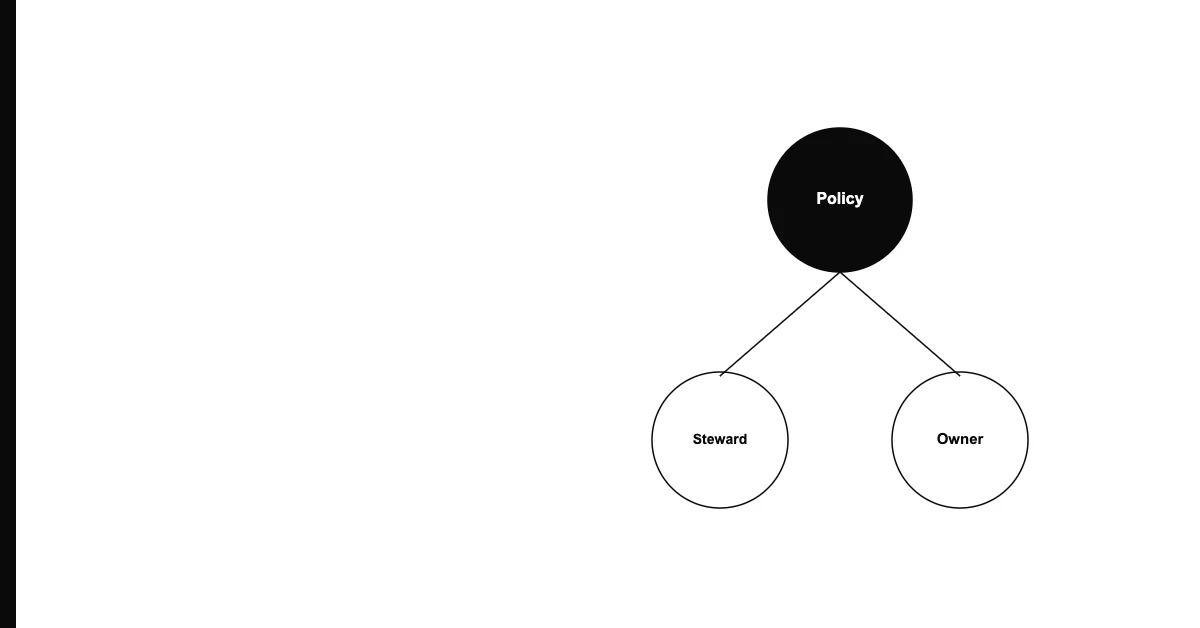
Data governance is the framework that defines: who owns data, who can access it, how it should be defined, how it should be handled, and what standards it must meet. It's organizational infrastructure — policies, roles, and accountability structures built to manage data as a strategic asset.
Governance addresses questions like:
- Who is the owner of the customer data in our CRM?
- What does "active customer" mean across every system in our company?
- Who can access personally identifiable information, and under what conditions?
- What retention and deletion policies apply to our data?
Sohovi finds gaps, duplicates, and format errors in your CRM data — so your team is working from records they can trust.
Governance is primarily about people and process. It defines how decisions about data are made and who has the authority to make them.
What Is Data Quality?
Data quality is the degree to which data is accurate, complete, consistent, timely, valid, and unique. It's a measurement of the data itself — not the process for managing it.
Data quality addresses questions like:
- Are the email addresses in our CRM actually valid?
- Do our customer records have duplicate entries?
- Are sales figures consistent between our CRM and our accounting system?
- How many contacts are missing a phone number?
Sohovi automatically finds every duplicate in your dataset — including near-matches — and shows you exactly which rows are affected.
Data quality is primarily about the data. It's measured, monitored, and improved through profiling, validation, deduplication, and standardization.
How They Relate
Governance and quality are complementary. Good governance creates the conditions for good quality — by assigning data ownership, establishing definitions, and setting standards, governance gives quality programs clear targets to hit.
But governance does not automatically produce quality. An organization can have a beautifully documented governance framework with a Chief Data Officer and a data council — and still have 40% duplicate records in its CRM. Governance defines what should be true. Quality work is what makes it true.
The typical sequence: data quality problems force the recognition that data needs to be managed systematically. That recognition leads to governance. Governance then sustains quality over time by assigning accountability for maintaining it.
Which One Do You Actually Need?
The honest answer: most organizations need data quality work before they need governance.
Governance is expensive to build correctly. It requires organizational buy-in, role definitions, policy documentation, and ongoing maintenance. Before that investment is worthwhile, you need to understand what data quality problems you're actually solving — and that requires measuring your data quality first.
If your team can't answer "how bad is our data right now?", governance isn't your first move. Profiling and quality measurement is.
Start with governance first if:
- You're in a regulated industry where data handling requirements are legally mandated (GDPR, HIPAA, SOC 2)
- Your organization has multiple systems with conflicting definitions of the same data (each department calculates revenue differently)
- You've grown to the point where no single person knows who owns what data
- You need to onboard a data team and need clarity on how they'll operate
Start with data quality first if:
- Reports are unreliable and people have stopped trusting the data
- You're about to do a migration or system change and don't know what condition your data is in
- Marketing, sales, and operations are all using different numbers for the same metric
- You don't yet have the organizational buy-in to build a governance function
Tools like Sohovi can start you with quality measurement immediately — upload your data and get a report on completeness, duplicates, and format consistency in minutes — without a governance program in place.
Building Both Together (At the Right Stage)
As organizations mature, governance and quality reinforce each other:
- Quality measurements surface the problems that motivate governance investment
- Governance roles (data stewards, data owners) take responsibility for maintaining quality
- Governance standards define what "good" looks like so quality metrics have clear targets
- Quality monitoring tells governance whether policies are actually working
The goal isn't governance or quality — it's both. But the pragmatic starting point for most organizations is to measure quality first, fix the most critical problems, and then build the governance structures needed to prevent those problems from coming back.
Frequently Asked Questions
Q: Is data governance only for large enterprises? No. The principles apply at any size. A small business needs to know who owns their customer data, what it means, and how to keep it accurate — that's governance at a basic level. The complexity of formal governance programs scales with organizational size, but the concepts don't.
Q: Can you have data quality without data governance? Yes, temporarily. Many organizations improve data quality through one-time projects — deduplication, standardization, validation — without formal governance. But without governance, quality improvements tend to erode over time because no one is accountable for maintaining them.
Q: What's a data steward and how do they relate to quality? A data steward is a person assigned to own the quality of a specific dataset or domain. They define standards, monitor quality metrics, and take action when quality degrades. Stewardship is the bridge between governance (which assigns responsibility) and quality (which is what the steward maintains).
Q: What's a master data management (MDM) system and how does it relate? MDM is a specific type of system that creates a single, authoritative record for key entities — typically customers, products, locations, and suppliers. It's a governance and quality tool combined: governance says "there should be one version of each customer," and MDM is the technical system that enforces it.
Q: How do you measure data governance maturity? Common frameworks (DAMA's DMBOK, CMMI) define maturity levels from "undefined" (no governance) through "managed" (repeatable processes) to "optimized" (continuous improvement). Maturity is assessed against dimensions like policy coverage, role clarity, data ownership, and quality monitoring.
Q: Which comes first in a data strategy: governance or quality? Quality awareness typically comes first — you discover your data has problems, which motivates building governance to manage it. In highly regulated industries, governance requirements come first because compliance drives data management before data quality awareness does.
Q: Does data governance slow things down? Poorly implemented governance can — when it adds bureaucratic approval steps without commensurate risk reduction. Well-implemented governance actually speeds things up by reducing ambiguity. When everyone knows who owns what data and what it means, fewer decisions get stuck in committee.
Q: How long does it take to implement data governance? A basic governance framework (defined roles, documented standards for key datasets, a data council or committee) typically takes three to six months to implement meaningfully. Full enterprise governance programs are multi-year initiatives. Start with what's most critical, not with the comprehensive framework.
Q: What's a data catalog and does it belong to governance or quality? A data catalog is an inventory of your organization's data assets — what data exists, where it lives, who owns it, and what it means. It's primarily a governance tool, but it supports quality by making it visible which datasets need quality attention and who is responsible for them.
Q: Can small teams skip governance and just focus on quality? For small teams (under 20 people, one or two systems), informal governance — everyone knows who handles which data — is sufficient. Formal governance becomes necessary when data crosses teams, systems, or geographies, and when informal coordination breaks down.
If you're not sure where your data quality stands today, Sohovi can give you a clear picture in minutes. Upload any CSV and get a quality report covering completeness, duplicates, and format issues — the starting point for any quality or governance program. No code or setup required.