A data quality framework is a structured system that defines how your organization measures, manages, and improves the quality of its data — covering what dimensions matter, who is responsible, and how quality is monitored over time.
Without a framework, data quality work is reactive: you fix problems after they surface and cause pain. With a framework, it's proactive: you catch problems early, assign accountability, and improve systematically rather than firefighting indefinitely.
In this guide
- The core components of a data quality framework
- How to define quality dimensions for your specific context
- How to build measurement and monitoring into the framework
- How to get organizational buy-in and keep the framework alive
Component 1: Define Your Data Quality Dimensions
A data quality framework starts with defining what "quality" means for your organization. Industry standards (DAMA, ISO 8000) define six core dimensions:
Accuracy: Does the data reflect reality? Is the customer's phone number their actual phone number?
Sohovi scores your dataset against your own accuracy standards and highlights the columns and rows where values fall outside expected ranges.
Completeness: Are all required fields populated? Are records missing critical information?
Consistency: Is the same information represented the same way across systems? Does sales and finance agree on revenue?
Timeliness: Is the data current enough to be useful? Is yesterday's inventory data useful for today's purchasing decisions?
Validity: Does the data conform to defined formats, ranges, and business rules? Is "2024-13-45" a valid date?
Uniqueness: Is each entity represented once? Are customer records deduplicated?
Sohovi automatically finds every duplicate in your dataset — including near-matches — and shows you exactly which rows are affected.
Not all six dimensions are equally important for every dataset. A customer contact list has high stakes for completeness and validity. A real-time event log has high stakes for timeliness. Your framework should weight dimensions by dataset and use case, not apply uniform standards to everything.
Component 2: Inventory Your Critical Datasets
You can't manage quality across every dataset simultaneously. Start by identifying which datasets have the highest impact on your organization if they're inaccurate, incomplete, or stale.
Ask:
- Which datasets feed key reports and dashboards?
- Which datasets are used in customer-facing processes (billing, shipping, communication)?
- Which datasets inform strategic decisions?
- Which datasets are required for compliance?
For each critical dataset, document: what it contains, who owns it, which quality dimensions apply, and what the business impact of quality failure would be. This becomes your data quality inventory — the foundation of the framework.
Sohovi measures all 10 data quality dimensions — completeness, validity, uniqueness, accuracy, consistency, and more — automatically across every column.
Component 3: Define Quality Standards Per Dataset
A standard is a measurable target: the definition of what "good" looks like for a specific field or dataset.
Examples:
- Email address field: must be a valid format, must not be a generic role address (info@, hello@), no more than 5% null rate
- Phone number field: must include country code for international contacts, no more than 10% null rate
- Order date field: must be a valid date, must not be in the future, no records older than 36 months without an archived flag
- Customer name: must not be a placeholder ("Test", "Unknown", "AAAA"), must be populated for all active accounts
Standards give you a target to measure against. Without standards, you can describe quality but you can't evaluate it.
Component 4: Build Measurement Into Operations
A quality framework without measurement is a policy document that collects dust. Measurement turns your standards into operational reality.
What to measure:
- Null rates for required fields
- Format validity rates for structured fields (email, phone, postal code)
- Duplicate rates for entity tables
- Age distributions for time-sensitive fields
- Cross-system consistency rates for shared entities
How often to measure:
- Weekly for high-volume, high-stakes datasets (customer data, transaction data)
- Monthly for slower-moving datasets (product catalog, employee records)
- On each load for pipeline and migration data
How to surface results:
- Simple dashboards accessible to data owners and stewards — not just to analysts
- Alert thresholds: notify when a metric degrades beyond a defined threshold
- Regular reports shared with stakeholders during team or ops reviews
Tools like Sohovi can give non-technical data owners a quick quality read on their data without requiring engineering support — upload any CSV and see null rates, format issues, and duplicates in minutes.
Component 5: Define Ownership and Accountability
A framework without clear ownership is documentation, not a system. For each dataset in your quality inventory, define:
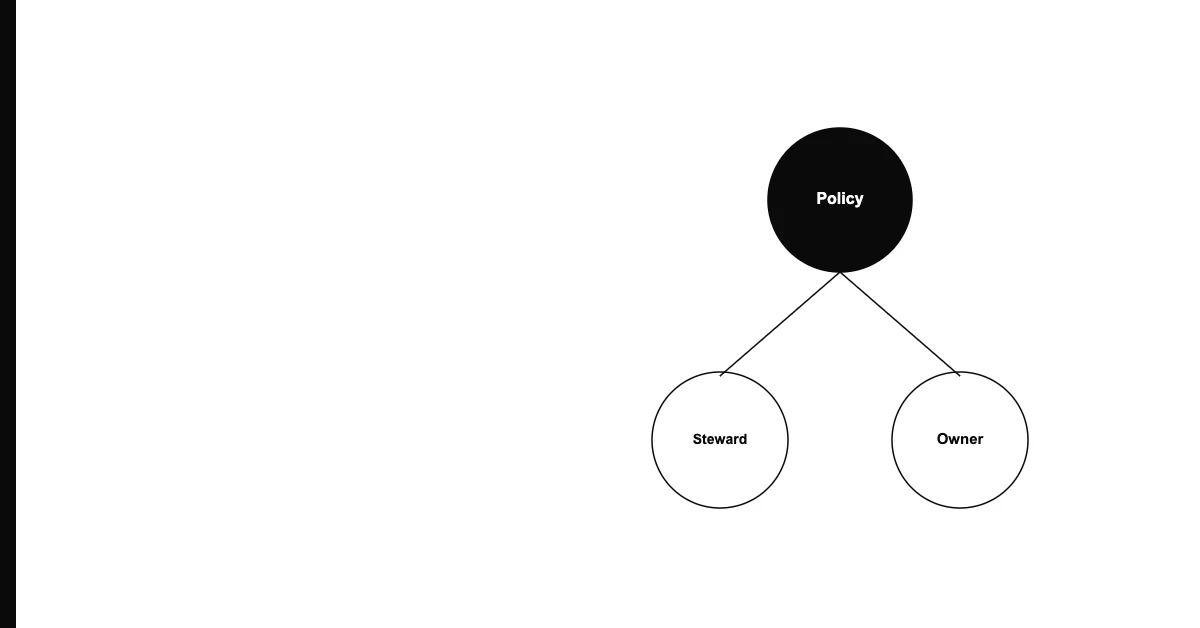
- Data owner: The business leader accountable for quality outcomes in this domain
- Data steward: The operational person responsible for day-to-day monitoring and issue resolution
- Review cadence: How often quality metrics are reviewed and by whom
Document this in a data ownership matrix and make it accessible to everyone involved.
Component 6: Define Remediation Processes
When quality metrics degrade, what happens? Your framework needs documented answers:
- Who is notified when a threshold is breached?
- What's the process for root cause analysis?
- Who has authority to implement fixes?
- What's the escalation path if the steward can't resolve the issue?
- How is the fix verified?
Remediation processes prevent quality failures from becoming prolonged problems because nobody knew what to do next.
Component 7: Make the Framework a Living Document
Data quality frameworks fail when they're treated as one-time deliverables. Datasets change. Systems change. Business priorities change. Your framework needs to evolve with them.
How to keep it alive:
- Quarterly reviews: Are the standards still the right standards? Are ownership assignments still accurate?
- Incorporate new datasets: When a new system or data source is added, onboard it into the framework
- Retrospectives after quality incidents: What does this incident tell us about gaps in the framework?
- Celebrate improvements: When datasets hit quality targets, acknowledge the teams responsible
Getting Organizational Buy-In
A framework built in isolation by a data team and handed to the business is rarely adopted. The most durable frameworks are built collaboratively:
- Involve data owners in defining standards for their domains — they understand the business context you don't
- Start with the datasets that are causing the most immediate pain — early wins build credibility
- Frame quality in business terms, not technical terms — "12% of your marketing emails are bouncing because of invalid addresses" is more compelling than "email validity rate is 88%"
- Show progress over time — a simple before/after quality score demonstrates the framework's value
Frequently Asked Questions
Q: How long does it take to build a data quality framework? A basic framework covering your three to five most critical datasets can be built in four to eight weeks. A comprehensive framework covering all significant datasets is a three to six month project. Start small and expand — don't wait for a perfect comprehensive framework before acting.
Q: Do we need software to implement a data quality framework? Not initially. A framework can start with documentation (ownership matrix, quality standards), manual measurement (SQL queries or CSV profiling tools), and simple dashboards. Software helps at scale, but the framework's value comes from the organizational structure, not the tooling.
Q: What's the difference between a data quality framework and a data governance framework? A data quality framework focuses specifically on measuring, managing, and improving data quality. A data governance framework is broader — it covers ownership, access control, privacy, data definitions, and quality as one component. Quality frameworks are often built within governance programs, but can exist independently.
Q: How do you prioritize which datasets to include first? Prioritize by impact: which datasets, if they had quality problems, would cause the most damage to business outcomes? Customer data, transaction data, and financial reporting data are typically the highest-priority starting points.
Q: Should quality standards be set by IT or by business teams? Standards should be set by the business teams closest to the data, with input from IT on what's technically enforceable. IT implements the technical controls; business teams define what "good" means from a use-case perspective.
Q: How detailed should quality standards be? Detailed enough to be measurable and unambiguous. "Email addresses should be valid" is too vague. "Email addresses must pass RFC 5322 format validation and have a null rate below 5%" is a standard. If you can't write a query or run a check against it, it's not specific enough.
Q: What's a data quality scorecard? A scorecard is a summary view of quality metrics across your critical datasets — showing current scores against targets, trend over time, and ownership. It's the primary operational output of a data quality framework, giving stakeholders a quick read on organizational data health.
Q: How do you handle quality standards for data that comes from external sources? External data (third-party lists, vendor feeds, partner integrations) requires additional validation at ingestion, because you can't control what comes in. Define acceptance criteria at the point of ingestion — reject or quarantine batches that don't meet them — and communicate standards to your external providers.
Q: What should I do if a quality standard is unachievable? If a standard is set but consistently not met, investigate whether the standard is wrong (too strict for the actual use case), the measurement is wrong (capturing false negatives), or the data production process has a structural problem. Standards should be aspirational but achievable — they should create improvement pressure, not permanent failure.
Q: How do you communicate framework results to executives who don't care about data quality details? Translate to business impact. "Our customer email list has an 88% validity rate" becomes "12% of our email campaigns are guaranteed not to reach their recipients — that's the equivalent of X hours of marketing spend going nowhere." Make the cost concrete and personal to their domain.
If you're starting to build a data quality framework and want to understand where your data stands today, Sohovi can profile any CSV in minutes — giving you the null rates, format validity scores, and duplicate counts that are the inputs to any quality standard. Try it free — no engineering required.