The assumption is that data quality is an enterprise concern — Fortune 500 companies with massive databases and regulatory requirements. Small businesses with a CRM and a few spreadsheets don't need to worry about it.
This assumption is wrong, and it's costing small businesses money every month.
Why Scale Makes It Worse, Not Better
Enterprise teams have dedicated resources to catch data problems before they become crises. Data engineers write validation pipelines. Data stewards review imports. Quality checks are built into the workflow.
Sohovi lets you set up validation rules for any column and instantly see which rows fall outside them — no code or SQL required.
Small businesses have none of this infrastructure. When a campaign goes out to a list full of duplicates and invalid emails, no system catches it first — it just happens. When a report is built on a dataset with 30% missing values, no one flags it — the report goes to leadership and drives a wrong decision.
The smaller the team, the more each person relies on the data being correct — and the less capacity there is to catch problems before they cause harm.
What Bad Data Specifically Costs Small Businesses
Email campaigns: Industry estimates put the average email bounce rate at 2% for healthy lists. A list with no quality checks can easily run 6–10%. Above 5%, inbox providers begin penalizing sender reputation — costing you deliverability for your entire list.
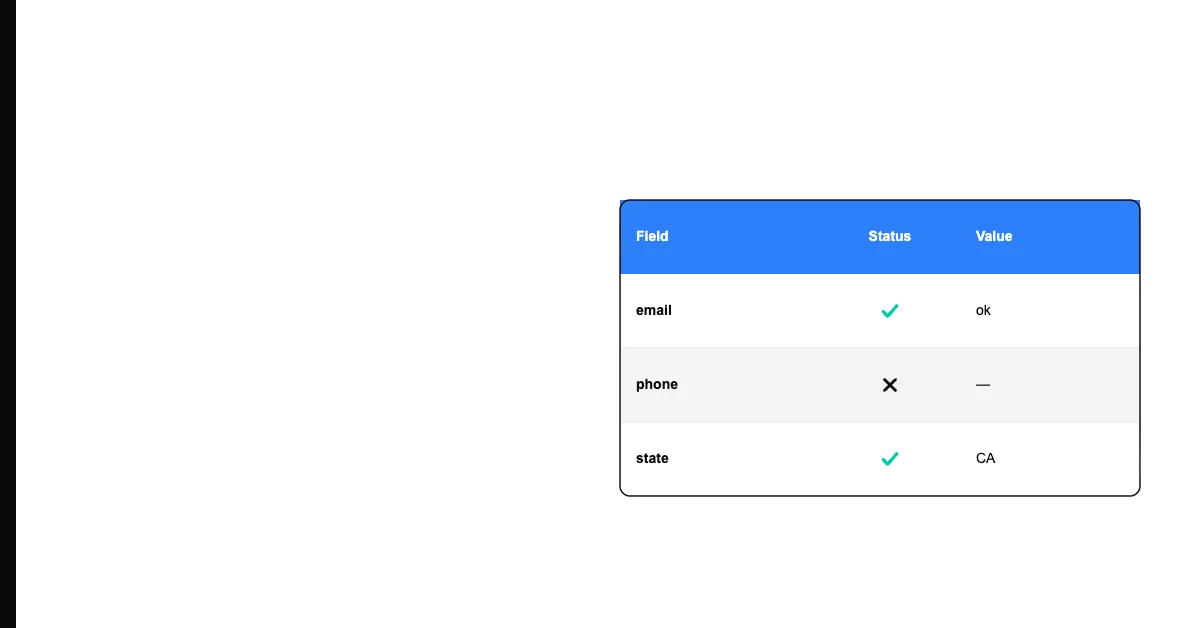
Sohovi applies your data quality rules automatically across the whole dataset and highlights every violation — so nothing slips through.
Sales outreach: Time spent calling wrong phone numbers, emailing bounced addresses, and following up with contacts who left the company 18 months ago is pure waste.
Business decisions: A revenue report built on a dataset with duplicate transaction records overstates performance. A customer count based on undeduped records makes the business look larger than it is. Wrong numbers drive wrong decisions.
Customer experience: Sending the same person the same email twice because they appear twice in your database damages the relationship.
The Good News
Small businesses don't need enterprise solutions to address these problems. A lightweight profiling tool, a validation habit, and a deduplication pass before major uses address the vast majority of data quality risk.
Sohovi automatically finds every duplicate in your dataset — including near-matches — and shows you exactly which rows are affected.
The barrier isn't budget or technical complexity — it's awareness. Now you're aware.
Start with your most important dataset. Upload it to Sohovi and see what's actually in it. The profile usually reveals 3–5 problems you didn't know existed and can fix in an afternoon.