A data catalog is a centralized inventory of an organization's data assets — including datasets, databases, tables, reports, and files — with metadata that helps users find data, understand what it contains, assess its quality, and know who owns it.
Think of a data catalog as the library card catalog of your organization's data. Instead of knowing which database has which table, you search the catalog, find the dataset you need, and learn its quality, freshness, and who to contact for questions.
What a Data Catalog Contains
A data catalog stores metadata about each data asset:
- What it is: Dataset name, description, format
- Where it lives: Database, schema, table name, or file location
- What's in it: Column names, data types, sample values
- Who owns it: The team or individual responsible for its accuracy
- How fresh it is: Last updated timestamp, update frequency
- How good it is: Data quality scores, known issues
- Who uses it: Reports, dashboards, and downstream systems that consume it
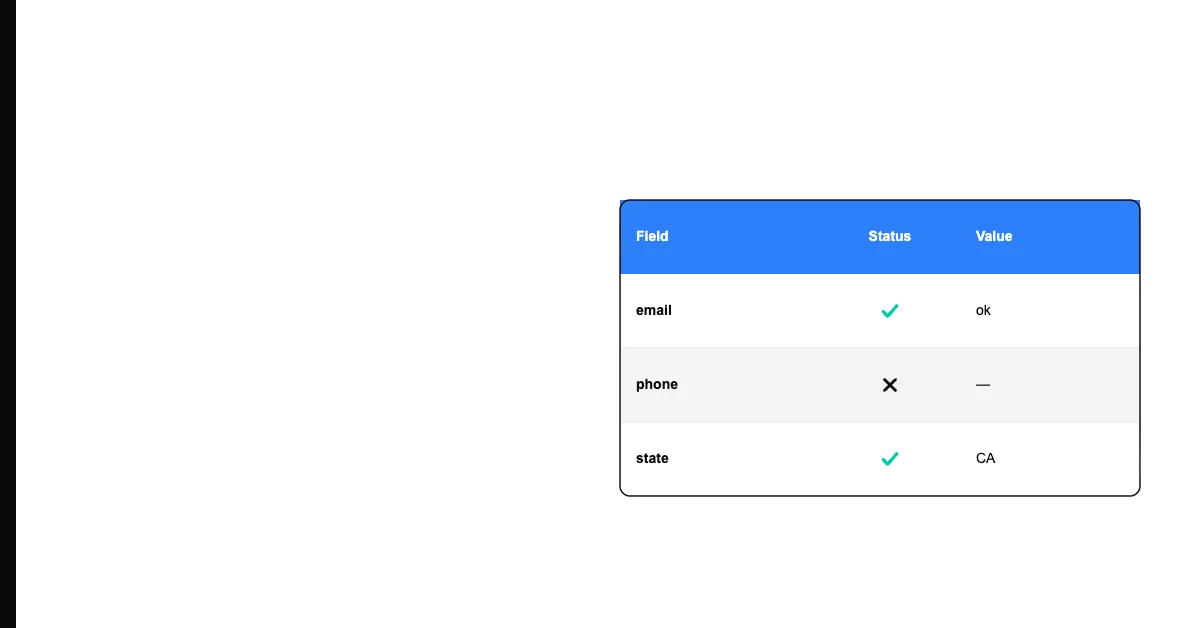
Sohovi scores your dataset against your own accuracy standards and highlights the columns and rows where values fall outside expected ranges.
Data Catalog vs. Data Dictionary
These terms are related but distinct. A data dictionary defines individual fields — their names, meanings, types, and allowed values. A data catalog inventories entire datasets and provides broader context: where each dataset lives, who uses it, how it's connected to other datasets, and whether it's trustworthy. Most enterprise data catalogs include a data dictionary as one component.
Does Your Business Actually Need a Data Catalog?
You probably don't need one if:
- You have fewer than 10 data sources
- Your team regularly knows where data lives
- You have fewer than 20 people using data
You probably do need one if:
- Teams regularly ask "where does this data come from?"
- Multiple teams use the same datasets for different purposes
- You've had incidents where the wrong dataset was used for an important decision
- You're subject to data governance or compliance requirements that require data inventories
For most small businesses, a well-maintained spreadsheet documenting your most important datasets serves the purpose until you outgrow it.
Sohovi gives you a full quality report on any spreadsheet in seconds — upload your file and see exactly what needs fixing.
Frequently Asked Questions
Q: What is a data catalog in simple terms? A data catalog is an organized inventory of all the data your organization has — where it lives, what it contains, who owns it, and how trustworthy it is. It helps people find the right data quickly and understand it correctly before using it.
Q: What is the difference between a data catalog and a data dictionary? A data dictionary defines individual fields (what each column means). A data catalog inventories complete datasets and provides context about where they live, who uses them, and how they're connected. A catalog typically includes a data dictionary as one of its components.
Q: What are the most popular data catalog tools? Enterprise options include Alation, Collibra, Atlan, and Microsoft Purview. Open-source options include Apache Atlas and DataHub (LinkedIn). For smaller teams, dbt docs provides lightweight cataloging for SQL-based transformations.
Q: How is a data catalog different from a database? A database stores data. A data catalog stores metadata about data — information about the datasets themselves. You query a database to get customer records; you query a data catalog to find out which table contains customer records and whether its data is trustworthy.
Q: What is metadata in a data catalog context? Metadata is data about data — the information that describes a dataset. In a catalog, metadata includes things like column names, data types, update frequency, quality scores, lineage, and business definitions. Good metadata is what makes a catalog useful.
Q: How does a data catalog improve data quality? A data catalog surfaces quality information alongside each dataset — so users know before they use a dataset whether its quality is sufficient for their purpose. It also enables data stewards to monitor and flag quality issues in a centralized place.
Q: What is a data steward and how do they relate to a data catalog? A data steward is the person responsible for maintaining the quality and accuracy of a specific data domain or dataset. In a data catalog, stewards are the named owners of each dataset — the person to contact with questions or to report quality issues.
Q: Can a data catalog help with GDPR or data privacy compliance? Yes. A data catalog that inventories all data assets, including personal data, helps organizations respond to data subject access requests, conduct data protection impact assessments, and maintain required records of processing activities.
Q: How long does it take to build a data catalog? Enterprise implementations with comprehensive metadata collection can take months. For smaller organizations, a basic catalog covering 20-50 important datasets can be built in days using a spreadsheet or lightweight tool.
Q: What is active metadata and why is it becoming important? Active metadata refers to metadata that is dynamically updated based on actual data usage — who accessed a dataset, how often, what queries were run against it. Active metadata makes catalogs more useful by reflecting the current state and usage patterns of data assets.
A data catalog solves the "I don't know where to find the right data" problem. If your team wastes time hunting for datasets or second-guessing whether they've found the right one — a catalog, even a simple spreadsheet version, will save significant time.