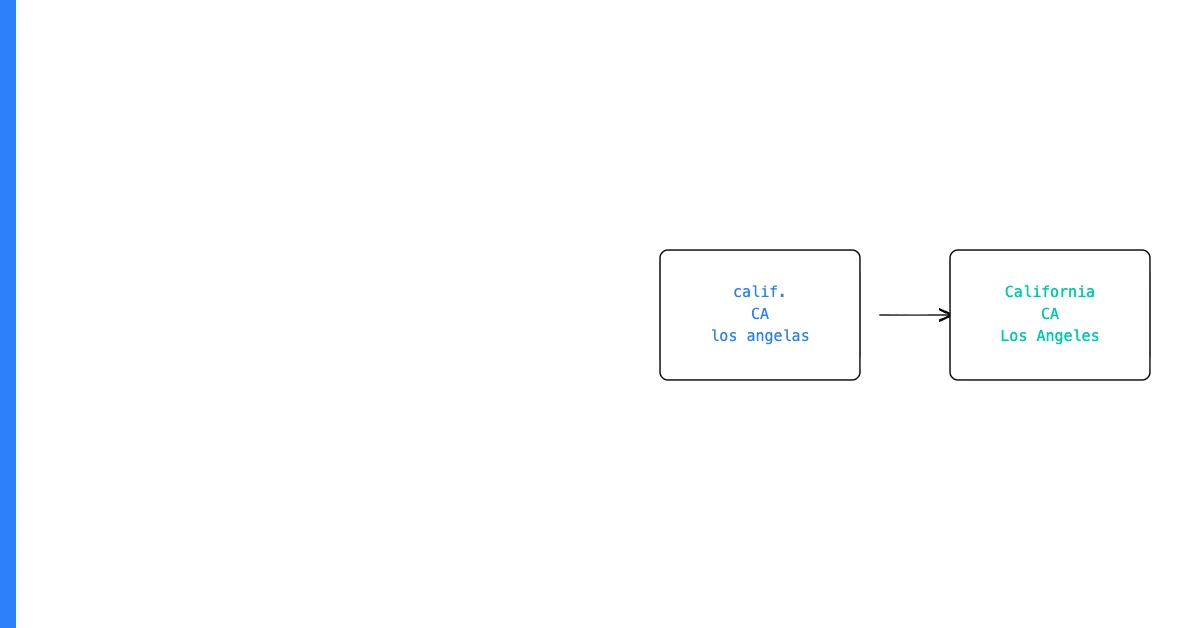
You can standardize product names and SKUs across systems by establishing a master product catalog with canonical names and identifiers, creating mapping tables for each system's variant identifiers, and enforcing the canonical ID in all cross-system data flows.
Product data inconsistency is one of the most common causes of inventory discrepancies, revenue reporting errors, and fulfillment failures in multi-system retail and e-commerce operations. The same physical product gets different names, different codes, and different identifiers in different systems — and every report that crosses a system boundary produces wrong results.
Why Product Data Gets Out of Sync
Different systems created independently: Your e-commerce platform was set up before your inventory system. Both generated their own product IDs with no relationship to each other.
Product naming conventions evolved: What was "Widget Pro 500" at launch is now "WPro500" in the warehouse system and "Widget Professional Series 500ml" on the website.
Sohovi validates your dataset before it enters the warehouse — catching format errors, nulls, and duplicates at the source.
Multiple import sources: New products entered from supplier files use the supplier's codes, not yours. Different suppliers use different naming conventions.
Acquisitions and mergers: Two companies with two product catalogs, merged into one operation but not into one catalog.
Building a Master Product Identifier
The foundation of product data standardization is a master product catalog that serves as the single source of truth:
Required fields per product:
- Master SKU (your canonical identifier — doesn't change)
- Product name (canonical display name — may be updated)
- System-specific ID mappings (e-commerce platform ID, warehouse system ID, ERP item code, supplier item number)
- Status (Active, Discontinued, Seasonal)
- Category (standardized category from your canonical category list)
The master SKU is the anchor. Every other system's identifier maps to a master SKU. Cross-system joins use master SKU as the common key.
Standardizing Product Names
Product names are more subjective than identifiers, but consistency still matters for customer-facing content, search, and reporting.
Name standardization rules:
- Consistent capitalization (Title Case or sentence case — choose one)
- Consistent use of units and measurements ("500ml" not "500 ml" or "500ML")
- Consistent abbreviation conventions ("Pro" not "Professional" in names if that's your convention)
- No HTML entities or special characters in product names
- Maximum character length for external channel compatibility
Frequently Asked Questions
Q: What is the most important step in product data standardization? Establishing a master product catalog with canonical SKUs that serve as the permanent identifiers for each product. All other systems' identifiers become aliases of the master SKU. Cross-system joins use the master SKU, not system-specific IDs.
Q: How do I handle products that have different names in different sales channels? Separate the canonical product name (for internal use, reporting, and analytics) from channel-specific display names (optimized for each platform's search algorithm and customer expectations). Store both — the canonical name for cross-system consistency, the channel names for customer-facing display.
Q: What is a product information management (PIM) system and when do I need one? A PIM is a centralized system for managing product data — the master catalog, channel-specific variations, digital assets, and syndication to multiple platforms. You need a PIM when: you manage products across multiple sales channels, your product catalog is large and changes frequently, or multiple teams contribute to product data. For small catalogs, a well-maintained spreadsheet master catalog can serve the same purpose.
Q: How do I map old SKUs to new SKUs when we reformat our identifier scheme? Create and preserve a mapping table: old SKU → new SKU. This table is permanent — it's the historical record of identifier changes. Any system that needs to reconcile old data with new identifiers queries this table. Never delete old SKUs; mark them as deprecated and record when they were deprecated.
Q: What's the most common cause of SKU proliferation? Duplicate product entries created when the same product is entered multiple times — either because the importer didn't check for existing records, or because the product was entered under slightly different names that weren't recognized as the same item.
Q: How do I prevent SKUs from getting duplicated across systems? Enforce a check at import: before any new product is added to any system, check whether a product with the same master SKU already exists. If it does, update the existing record rather than creating a new one.
Q: What's the impact of non-standardized product names on e-commerce search rankings? Product names affect search ranking on marketplaces like Amazon and Google Shopping. Inconsistent naming (different keywords used in different listings for the same product) dilutes search signal. Canonical product names with consistent keyword usage perform better in platform search.
Q: How should I handle product bundles and kits in my master catalog? Bundles and kits should have their own master SKU, separate from the component SKUs. They need their own pricing, inventory (if pre-assembled), and product content. The bill-of-materials relationship (bundle X contains component SKUs A, B, and C) is stored separately from the master product record.
Q: How do I audit my current product catalog for naming inconsistencies? Export your product name field and run a distinct-value analysis looking for: the same product described differently, duplicates at different levels of detail, abbreviation variants ("Pro" vs "Professional"), and unit format variants ("500ml" vs "500 mL").
Q: What's the best way to migrate from an inconsistent product catalog to a standardized one? Do it incrementally rather than attempting a big-bang migration. Start with your highest-velocity products (those with the most transactions or the most cross-system references) and standardize those first. Build the master catalog record by record, validating each mapping before migrating. A phased migration produces less disruption than trying to standardize everything at once.
Product data standardization unlocks accurate inventory management, reliable cross-channel reporting, and trustworthy financial analysis. The master SKU is the foundation — establish it first and map everything else to it.