Every data quality assessment involves examining your data. That examination has to happen somewhere, by someone, using some tool. For sensitive data, the "where", "who", and "what tool" choices determine whether your quality process is itself a privacy risk.
Here's how to build a data quality process that maintains high privacy standards throughout.
The Privacy Risks in Standard Data Quality Processes
Cloud-based tools: Files uploaded to cloud-based quality tools leave your infrastructure. Even with strong privacy policies, this creates data residency, data transfer, and breach risk concerns — especially for regulated data.
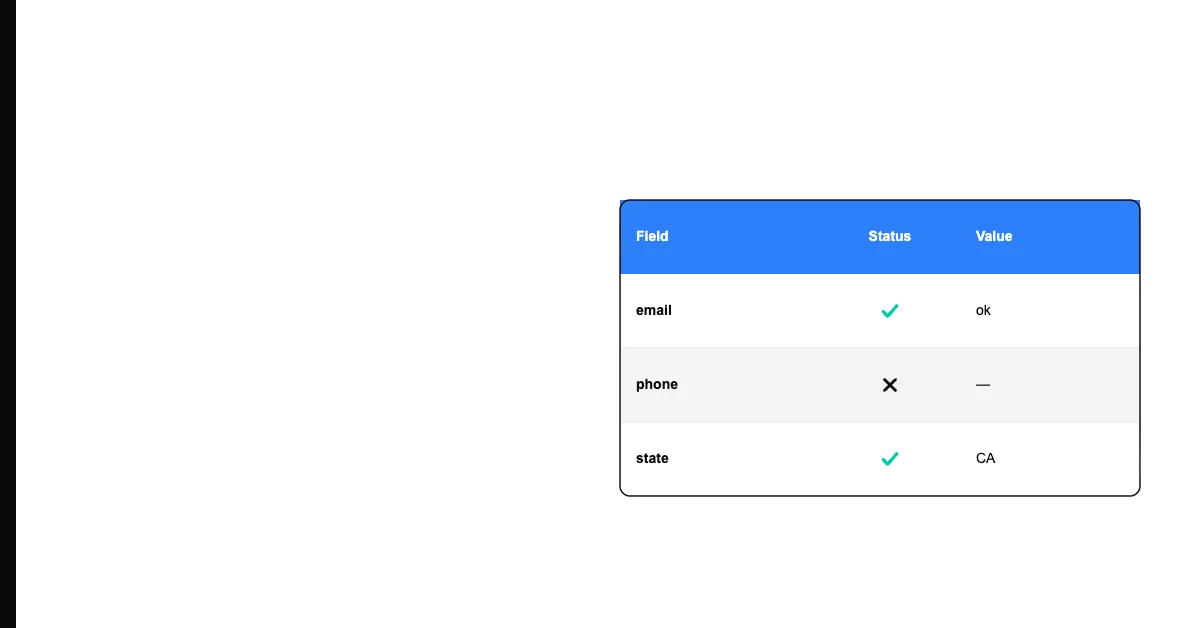
Sohovi automatically detects PII in your datasets — emails, phone numbers, SSNs — all processed client-side so your data never leaves the browser.
Third-party access: Hiring external consultants to audit your data means sharing sensitive records with outside parties, requiring appropriate data processing agreements.
Internal over-sharing: Running quality checks requires access to the data. If the person running the check has broader access than their role requires, this is a data governance problem.
Screen-sharing and screenshots: During quality review workflows, sensitive data is often displayed on screens that might be visible to others or captured in screenshots.
Building Privacy Into the Process
Principle 1: Process data as locally as possible The most privacy-safe data quality tools run entirely in your browser (like Sohovi) — the data is analyzed on your machine and never transmitted externally. For the highest-sensitivity data, this is the right approach.
Principle 2: Work with minimum necessary data Don't load the full dataset when a sample suffices. Don't include all columns when only a subset needs to be profiled. Limit the data exposure to what's necessary for the quality assessment.
Principle 3: Anonymize before sharing When you need to share data for quality review (with a consultant, across teams, or with a tool that requires upload), anonymize or pseudonymize first. Replace real values with realistic synthetic values that have the same statistical properties.
Principle 4: Separate the quality assessment from the data The output of a quality assessment (completeness rates, error counts, format patterns) is usually not sensitive even when the underlying data is. Share the assessment output, not the data.
Sohovi profiles every column in your dataset for completeness and flags the exact rows where values are missing — free to try.
Principle 5: Access controls for quality workflows Only people who need to access data for quality purposes should have access. Role-based access controls, time-limited access for specific quality projects, and access logging all reduce the risk surface.
Try Sohovi free at sohovi.com — privacy-first, browser-based data quality profiling that never transmits your data externally. Build it into your privacy-safe quality process.