You have a spreadsheet you need to audit for personal data. Your company's security policy restricts uploading customer data to third-party cloud services. Your compliance team needs a PII scan. You seem to be stuck.
You're not. PII detection that runs in your browser — with data processed locally and never transmitted to a server — solves this problem exactly.
Why This Matters for Privacy-Conscious Teams
The standard approach to data quality tools involves uploading your file to a server, where the analysis runs. For many datasets — particularly those containing existing personal information — this upload creates its own compliance issue. You'd be sending personal data to an external service to check whether you have personal data.
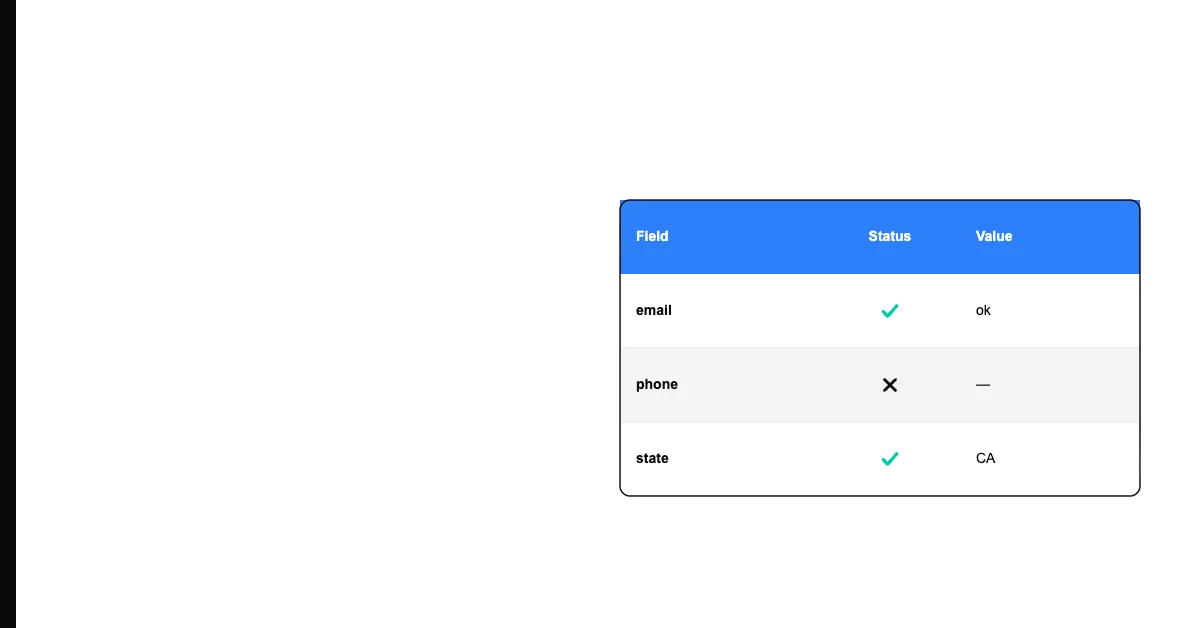
Sohovi automatically detects PII in your datasets — emails, phone numbers, SSNs — all processed client-side so your data never leaves the browser.
For regulated industries (healthcare, finance, legal), companies with strict data handling policies, and any team working with sensitive customer information, the upload model is a non-starter.
How Browser-Based PII Detection Works
Modern browsers are capable of running analysis directly on your local machine — in the same browser tab, without transmitting any data externally. The file is read from your device, processed in your browser's JavaScript environment, and the results are displayed to you. Nothing leaves your machine.
This is how Sohovi works: upload your CSV, and the PII scan runs entirely in your browser. The file is never transmitted to any server. Your compliance team's requirements are met, and you get the PII detection you need.
What PII Detection Actually Scans For
A good local PII scanner checks:
- Column names: Flags columns with names suggesting personal data (email, phone, name, ssn, dob, address)
- Email patterns: Values that match standard email format across any column
- Phone patterns: Values matching phone number patterns (7–15 digits with formatting characters)
- SSN patterns: 9-digit sequences matching XXX-XX-XXXX or XXXXXXXXX format
- Credit card patterns: 16-digit sequences matching common card formats
- Date-of-birth patterns: Dates in plausible birth year ranges
- IP address patterns: Values matching IPv4 or IPv6 format
Alternatives for Local Detection
If you need to detect PII without any tool:
- Column name review: Manual inspection of all column headers
- Excel pattern search: Use SEARCH() or FIND() with @ to flag potential emails; LEN() and VALUE() to identify 9-digit sequences (potential SSNs)
- Python locally: The presidio library from Microsoft runs locally and provides sophisticated PII detection — if you have Python skills
For most teams, the browser-based approach (Sohovi or similar) provides the best combination of thoroughness and simplicity without any data exposure. Try it free at sohovi.com.