When Inventory Data Lies
You show "12 in stock." A customer orders 3. Your picker goes to the shelf and finds 0.
Or: you show "Out of stock" on a product that has 47 units in a back corner of your warehouse because someone forgot to update the system when they received a shipment.
Both scenarios cost money and frustrate customers. Inventory data accuracy is not a nice-to-have — it's foundational to operating a functioning e-commerce business.
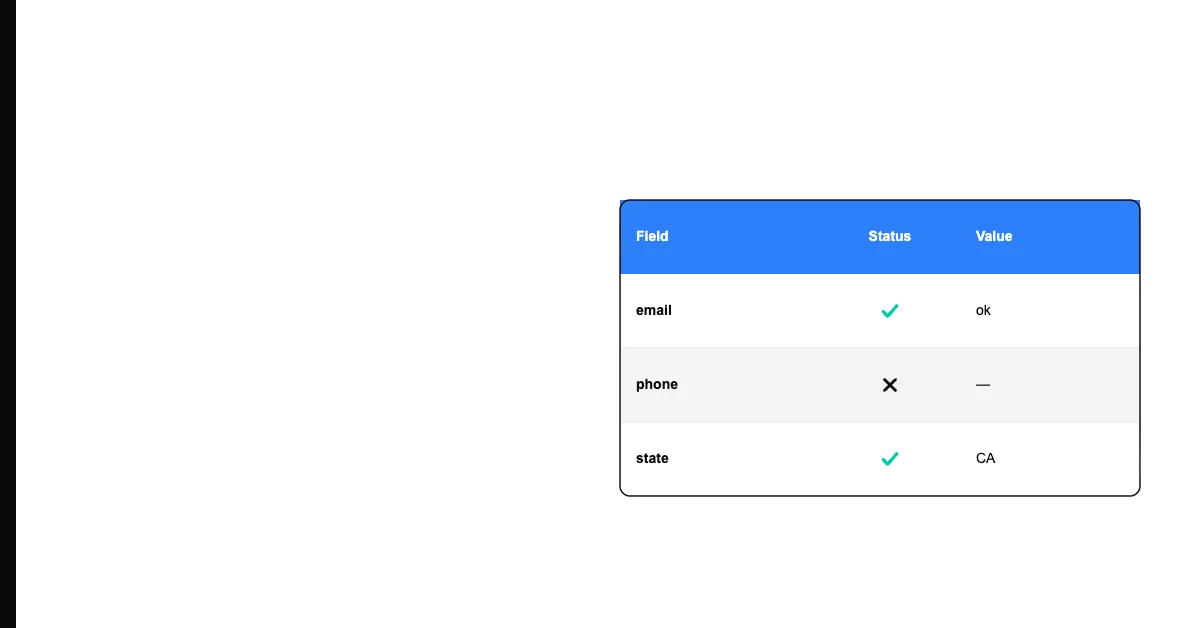
Sohovi scores your dataset against your own accuracy standards and highlights the columns and rows where values fall outside expected ranges.
Why Inventory Data Gets Out of Sync
Manual adjustments without documentation: Someone removes 5 units for a sample request and forgets to adjust the system. Or adjusts by -500 instead of -5.
Returns not restocked in the system: Item physically returned to shelf, system still shows it as sold.
Damaged inventory not written off: Broken product pulled from shelf, system still shows it as available.
Receiving errors: 50 units received but 45 entered in the system. Or entered twice.
Multi-channel sync failures: You sell on Shopify, Amazon, and wholesale. A sale on Amazon should decrement inventory everywhere. If the sync fails or lags, you can oversell.
The Inventory Data Accuracy Audit
Step 1: Physical count vs. system count Pick 50 random SKUs. Count them physically. Compare to system. Any discrepancy > 2% signals a systemic process problem, not a one-off error.
Step 2: Aging adjustments review Export your inventory adjustment history. Any adjustment without a logged reason ("sample," "damaged," "receiving correction") is an undocumented change. Count how many you have. High numbers of undocumented adjustments mean your team is bypassing your inventory process.
Step 3: Open orders vs. available stock Pull all unfulfilled orders. Sum the units needed by SKU. Compare to available inventory. If you have open orders for more units than you have in stock for any SKU, you're oversold — and you need to act before those orders ship.
Step 4: Multi-channel reconciliation If you sell on multiple channels, export inventory from each channel and your master system. Any SKU where quantities don't match across channels within your sync tolerance is a sync issue.
Preventing Future Discrepancies
- Require reason codes for all inventory adjustments: No adjustment without selecting: damaged, sample, gift, receiving correction, cycle count.
- Daily cycle counts: Count 20–30 SKUs per day rather than an annual full count. Errors are caught when they're small.
- Automated alerts: Set alerts for any adjustment over a threshold (±50 units for most businesses) — these get human review before they go through.
- Monthly reconciliation: Compare inventory report snapshots month-over-month and investigate unexpected movements.
Sohovi tracks quality trends across runs and alerts you when a metric — null rate, duplicate count, score — moves outside its normal range.