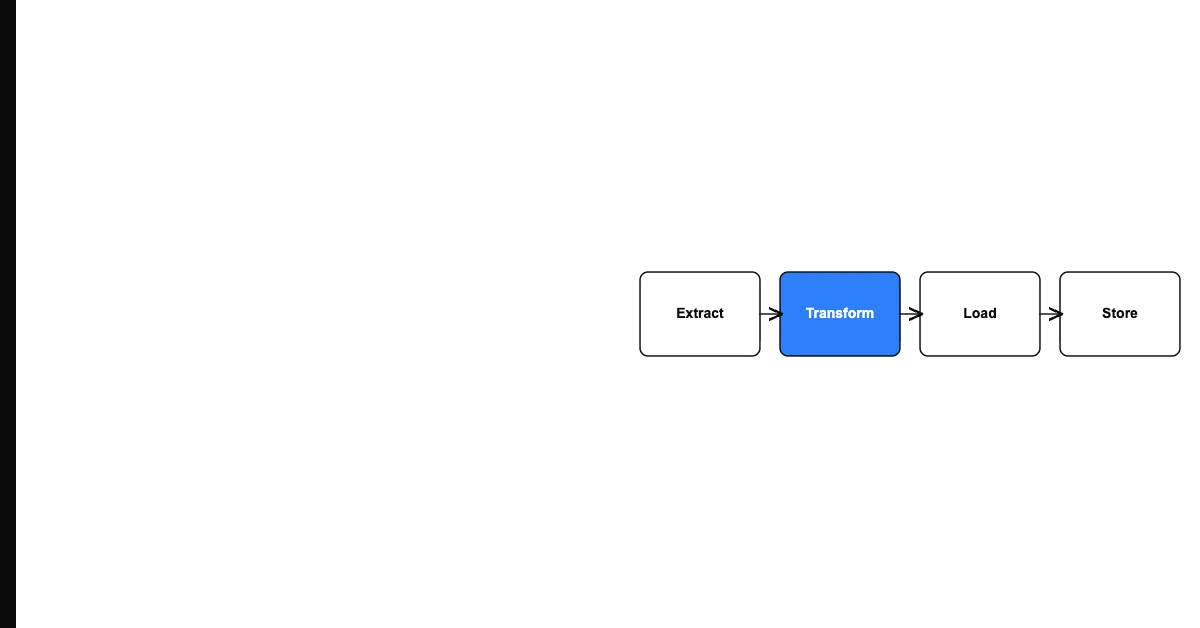
You can build data quality checks into API integrations by validating data at each integration boundary — checking schema conformance when data arrives, applying transformation rules before writing to the destination, and implementing monitoring that alerts when quality metrics deviate from expected patterns.
API integrations are the arteries of modern business data — they move data between your CRM, marketing platform, billing system, customer success tool, and every other connected application. When they work correctly, they keep your systems in sync. When they have data quality problems, they silently propagate bad data at machine speed to every connected system.
Where API Integration Data Quality Fails
Schema mismatch: The API contract changes — a field is renamed, a data type changes, a new required field is added — and your integration code isn't updated. Data is mapped to wrong fields or required fields are missing.
Missing transformation: The source API returns dates in RFC 3339 format (2024-03-05T14:30:00Z). Your destination expects YYYY-MM-DD. Without a transformation step, dates are either wrong or produce errors.
Rate limiting and partial loads: Under high load, API rate limits cause some writes to fail silently. The integration reports success (the batch processed) but some records weren't written due to rate limit errors.
Sohovi profiles your datasets for quality issues in minutes — see what's broken before it breaks your pipeline — try Sohovi free.
Upsert vs. insert confusion: An integration configured to insert records creates duplicates for every re-send, rather than updating existing records when the same entity is sent again.
Silent API errors: Many API endpoints return HTTP 200 (success) for semantically incorrect requests — validating only that the request was received, not that the data was stored correctly. Checking only HTTP status codes misses these semantic failures.
Building Quality Checks Into API Integrations
Validate incoming data before writing. When your integration receives data from an external API, validate it against your expected schema before writing to your system. Check field presence, data types, and value ranges. Route failing records to an exception queue.
Sohovi lets you set up validation rules for any column and instantly see which rows fall outside them — no code or SQL required.
Implement transformation validation. After any transformation (format conversion, value mapping, field calculation), run spot-checks to confirm transformations produced expected output.
Implement reconciliation. After any bulk write, reconcile: confirm the count of records written matches the count of records sent. Implement checksums or totals comparison for financial data.
Log at every step. Log the input, the transformation result, the API response, and the write confirmation for every record. These logs are essential for diagnosing quality failures when they occur.
Set up anomaly alerts. Monitor key metrics over time — records processed per run, null rates in critical fields, error rates. Alert when these deviate significantly from the expected baseline.
Sohovi tracks quality trends across runs and alerts you when a metric — null rate, duplicate count, score — moves outside its normal range.
Frequently Asked Questions
Q: What is an API schema and why does schema validation matter for integrations? An API schema defines the structure of data that an API produces or accepts — field names, data types, required fields, and value constraints. Schema validation confirms incoming data matches the expected structure before processing. Without it, structural changes in upstream APIs silently corrupt downstream data.
Q: What is idempotency in API integrations and why does it matter? An idempotent API integration produces the same result whether called once or multiple times. For write operations, this means using upsert logic (update if exists, create if not) rather than pure inserts. Non-idempotent integrations create duplicates when retried after failures.
Q: How do I handle API rate limits without creating data quality problems? Implement a queue-and-retry pattern: when a rate limit error occurs, put the record back in a queue for retry rather than dropping it. Track which records have been written to prevent duplicates on retry. Use exponential backoff for retries to avoid triggering rate limits repeatedly.
Q: What is a webhook and what data quality considerations apply to webhooks? A webhook is a push-based API where the source system sends data to your endpoint when events occur. Data quality considerations: validate the webhook payload matches expected schema on receipt, implement duplicate detection (same event delivered more than once is common), and implement idempotent processing.
Q: How do I test an API integration for data quality before putting it in production? Send representative test payloads that cover edge cases: nulls in optional fields, maximum-length values, special characters, invalid value ranges. Verify that each test case is handled correctly — either processed successfully or routed to an exception queue with an informative error.
Q: What is a circuit breaker pattern in API integrations? A circuit breaker monitors API health and stops sending requests when the error rate exceeds a threshold — preventing a failing integration from degrading downstream systems with corrupted or partial data. When the circuit opens, data is queued until the API recovers.
Q: How do I detect when an API integration is silently failing? Monitor record counts over time. If your integration normally writes 500 records per hour and the count drops to 50 without a corresponding drop in source events, the integration is failing silently. Volume anomaly monitoring catches most silent failures.
Q: What is data lineage for API integrations? Data lineage tracks the origin of each record — which API call, at what timestamp, from which source system — as it moves through integrations. Lineage enables root cause analysis when quality problems are discovered: you can trace a bad record back to its origin.
Q: How should field mapping be documented for API integrations? Create a field mapping document that specifies: source API field name → destination field name, data type conversion required, transformation logic (if any), handling for missing/null values, and approved values for categorical fields. Version this document with the integration code.
Q: What is the most important data quality monitoring metric for an API integration? Error rate — the percentage of records that fail processing vs. succeed. A healthy integration has near-zero error rates. Rising error rates indicate schema drift, validation failures, or destination system issues. Alert when error rate exceeds 0.1% on any integration that writes to production systems.
API integrations propagate data quality problems at machine speed. Quality gates at each stage — incoming validation, transformation verification, write confirmation, reconciliation — are what separate integrations you can trust from ones you monitor with anxiety.