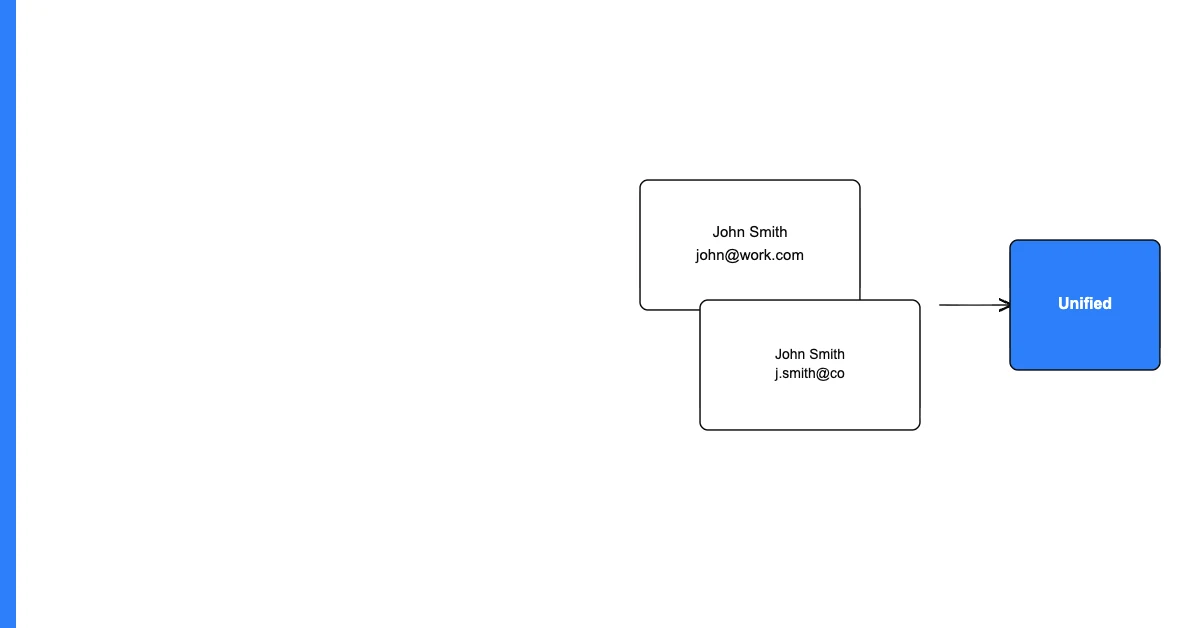
You can build a deduplication strategy for your business by defining what a duplicate is for each of your key datasets, establishing prevention checkpoints at data entry and import, scheduling periodic detection and resolution processes, and assigning ownership for each step — making deduplication a continuous practice rather than a one-time project.
Most businesses treat deduplication as a project: find the duplicates, clean them up, move on. Six months later, the duplicates are back. Deduplication as a project fails because data constantly enters your systems — every form submission, every import, every integration sync is a potential duplicate source.
A deduplication strategy treats it as a practice: ongoing, systematic, and owned.
Sohovi automatically finds every duplicate in your dataset — including near-matches — and shows you exactly which rows are affected.
The Four Components of a Deduplication Strategy
Component 1: Definition
Before you can find or prevent duplicates, you need to define what a duplicate is for each dataset.
For a customer contact database, a duplicate might be: any two records with the same email address. Or: any two records with the same email domain AND matching first name. Or: any two records with the same phone number AND same company. The definition determines your matching key.
Define it once, document it, and use the same definition consistently across all deduplication activities.
Component 2: Prevention
Prevention is the highest-leverage component. Every duplicate prevented at entry costs nothing to clean up later. Prevention checkpoints:
- At form submission: Check for existing records with the same email before creating a new one
- At list import: Deduplication check against existing records before loading
- At integration sync: Upsert logic (update if exists, create if not) in all integrations
- At manual entry: Enable CRM duplicate detection and configure it to alert on potential duplicates
Component 3: Detection
Even with prevention, some duplicates will slip through — data from before prevention was implemented, edge cases the prevention logic missed, manual overrides. Detection catches these on a scheduled basis.
Define a detection cadence:
- Continuous: Alert when duplicate rate exceeds threshold (requires monitoring tool)
- Monthly: Run duplicate count query and review
- Quarterly: Full deduplication audit and cleanup
Define the detection method:
- Exact matching: Check for exact duplicates on key fields
- Fuzzy matching: Identify near-duplicates using similarity scoring
- Manual spot checks: Review recent imports for patterns suggesting missed duplicates
Component 4: Resolution
When duplicates are detected, resolution defines what happens:
- Automated merge: For high-confidence exact duplicates, automatically merge and mark the secondary record as merged
- Review queue: Route borderline matches to a human reviewer for confirmation before merging
- Ownership: Assign one person responsible for resolving duplicates in each system
- Timeline: Define an SLA for resolution (e.g., duplicates reviewed within 5 business days of detection)
Building the Strategy for Each Dataset
Not every dataset needs the same deduplication strategy. Prioritize based on business impact.
| Dataset | Priority | Matching key | Cadence | |---|---|---|---| | Customer contacts (CRM) | High | Email address | Monthly detection, continuous prevention | | Email marketing list | High | Email address | Pre-campaign detection, continuous prevention | | Vendor/supplier master | Medium | Company name + domain | Quarterly detection, prevention at onboarding | | Product catalog | Medium | SKU | Quarterly detection | | Financial transactions | Low | Transaction ID | Continuous (automatic unique constraint) |
Frequently Asked Questions
Q: What is a deduplication strategy? A deduplication strategy defines how duplicate records are prevented, detected, and resolved on an ongoing basis across your key datasets. It converts deduplication from a one-time cleanup project into a continuous practice with defined owners, methods, and cadences.
Q: Why do duplicates keep coming back after a cleanup? Because data constantly enters your systems through new channels — form submissions, imports, integrations — and without prevention mechanisms at those entry points, new duplicates are created at the same rate as old ones are cleaned. A one-time cleanup without a prevention strategy is temporary.
Q: How do I prioritize which datasets to build a deduplication strategy for first? Prioritize based on business impact of duplicates. Datasets that drive customer-facing operations, financial reporting, or marketing campaigns — where duplicates cause direct revenue or relationship damage — should have higher-priority deduplication strategies.
Q: Who should own the deduplication strategy? Operational ownership belongs to the team that uses the data most — typically sales ops for CRM, marketing ops for email lists, finance for vendor and financial data. Technical support comes from data engineering or IT. Governance oversight comes from whoever owns data quality standards.
Q: What's the minimum viable deduplication strategy for a small business? Three things: (1) Enable native CRM duplicate detection, (2) run a deduplication check on any import file before loading, and (3) schedule a quarterly cleanup of your most critical dataset. This doesn't require any tools beyond what you likely already have.
Q: How do I measure whether my deduplication strategy is working? Track your duplicate rate over time for each key dataset. A well-functioning strategy should show a declining or stable duplicate rate after initial implementation. An increasing rate despite the strategy means prevention is failing somewhere — investigate the source.
Q: What is the relationship between deduplication strategy and data governance? Deduplication strategy is a component of data governance. Governance provides the framework (policies, ownership, standards) within which the deduplication strategy operates. A deduplication strategy without governance is fragile — it depends on individuals remembering to follow it. A deduplication strategy embedded in a governance framework has authority and accountability behind it.
Q: How does deduplication strategy change as a business grows? As data volume increases, manual deduplication becomes less feasible and automated tools become more necessary. As the number of systems grows, cross-system deduplication and entity resolution become more important. Scale requires systematizing what was previously informal.
Q: What's the most common mistake in deduplication strategy design? Focusing only on resolution (cleaning up existing duplicates) and ignoring prevention (stopping new duplicates from entering). Resolution without prevention is a permanent maintenance burden; prevention without resolution leaves existing problems in place. Both are required.
Q: How do I communicate the deduplication strategy to my team? Document it simply — what a duplicate is, where prevention checks happen, how often detection runs, who reviews and resolves. Then integrate it into existing workflows: the detection cadence is a calendar event; the prevention check is part of the import procedure; the resolution assignment is in the team's task management system.
A deduplication strategy is the difference between cleaning your data once and keeping it clean indefinitely. Define what a duplicate is, prevent new ones, detect existing ones, and resolve them on a schedule — with named owners for each step.
If you want to run a deduplication audit on your most important dataset as a starting point for building your strategy, Sohovi is free to try. Upload your CSV and get an instant duplicate count and analysis — no credit card, no code, no data leaving your browser.