The Hidden Time Cost of Manual Data Entry
For every client you invoice, you probably: open your CRM, update the contact record, open your invoicing tool, create the invoice, open your spreadsheet, enter the invoice, and then open your email to send it.
That's six steps for one invoice. If you do it 10 times a month, that's potentially 2 hours of data entry — for work that automation can do in seconds.
The Four Automations Every Solopreneur Should Have
1. Bank Feed to Accounting Software Your bank and credit card transactions should flow automatically into your accounting software (QuickBooks, Xero, Wave). You review and categorize; you don't manually enter.
This alone saves most solopreneurs 30–60 minutes per month.
2. Invoice-to-CRM Sync When you create a new invoice, your CRM should update automatically: the contact's "last invoiced" date, the invoice amount, and the status. Tools: HoneyBook, HubSpot CRM, and Dubsado do this natively. If your invoicing tool and CRM are separate, Zapier can connect them.
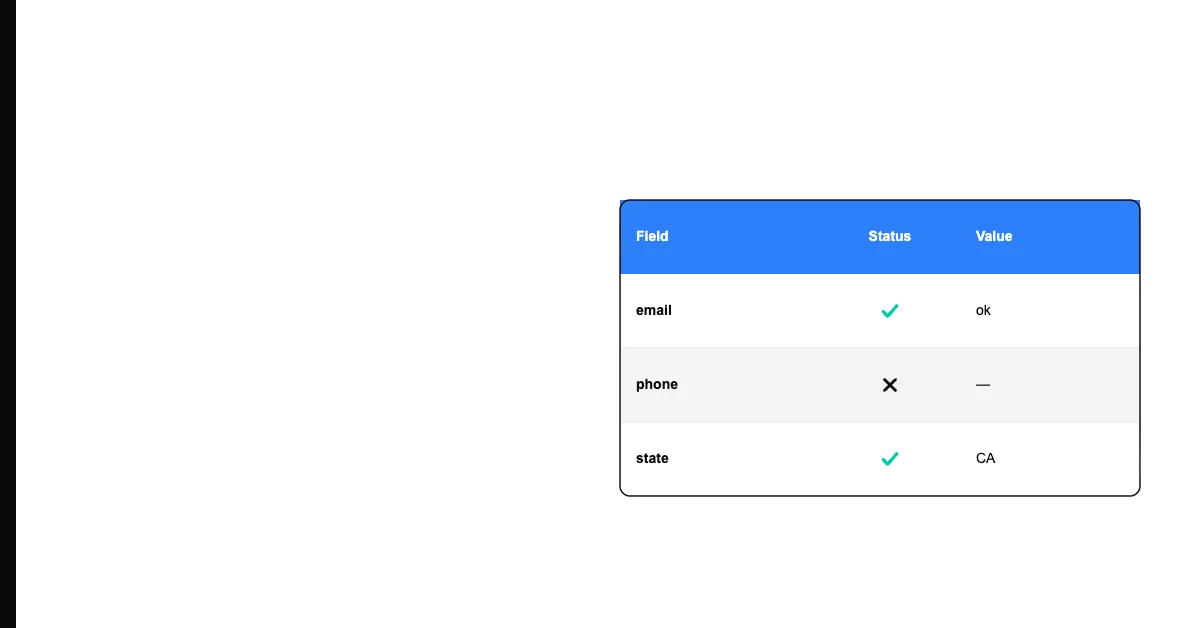
Sohovi finds gaps, duplicates, and format errors in your CRM data — so your team is working from records they can trust.
3. New Client Onboarding Sequence When a new client signs a contract, they should automatically receive:
- Welcome email (from a template)
- Onboarding questionnaire (from Typeform or JotForm)
- Calendar booking link (from Calendly or Cal.com)
Zapier or the native automation in your contract software (HoneyBook, Bonsai, Dubsado) handles this. Zero manual work once set up.
4. Expense Receipt Capture Instead of manually entering expenses from receipts, use a tool that extracts data from photos: Dext (formerly Receipt Bank), Expensify, or the receipt scanning built into QuickBooks and Xero. Photo → categorized expense entry.
Tools That Do Multiple Things Well
HoneyBook ($29–49/month): CRM + proposals + contracts + invoicing + automation for creative solopreneurs. One tool, deeply integrated.
Dubsado ($20/month): Similar to HoneyBook, stronger automation capabilities.
Bonsai ($24/month): Proposals + contracts + time tracking + invoicing. Popular with freelancers.
Any of these replace 3–4 separate tools and the manual work of keeping them in sync.
The Setup Investment
Automations take 2–4 hours to set up properly. They then save 5–10 hours per month indefinitely. The ROI is typically achieved within the first month.
Start with the highest-frequency manual task you do. Automate that first. Add automations one at a time — trying to automate everything at once leads to a complex system that breaks and you don't understand.