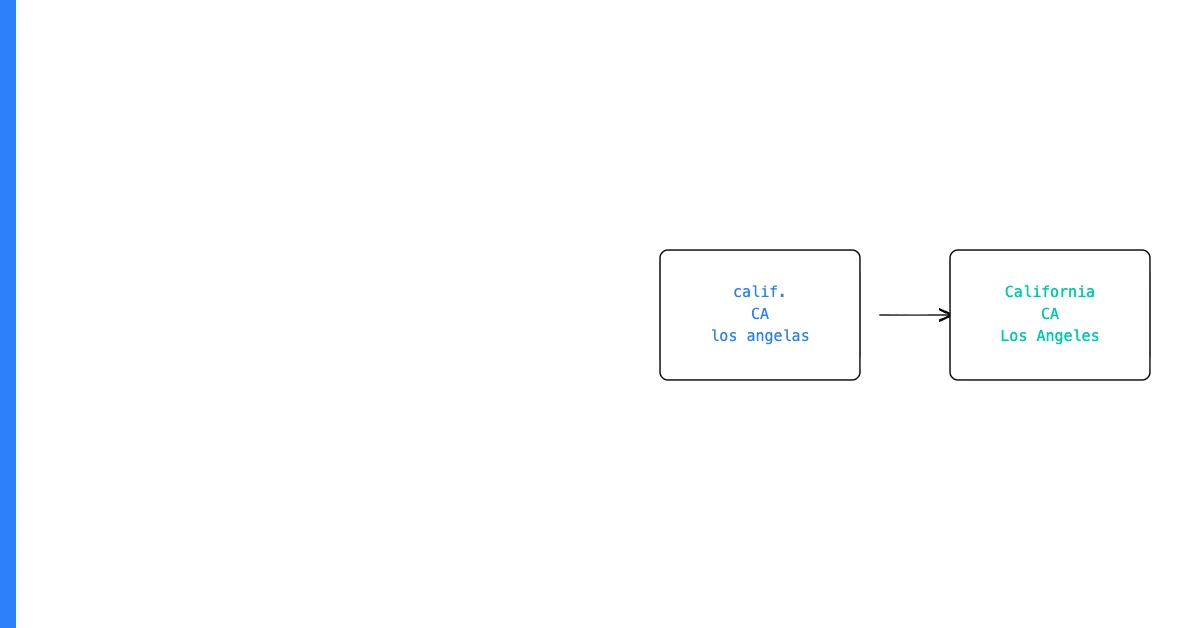
Referential integrity means that every foreign key in one dataset has a corresponding record in the related dataset — ensuring that references between tables are valid and nothing is pointing to a record that doesn't exist.
When referential integrity breaks, your data model becomes unreliable in hard-to-detect ways. An order with a customer ID that no longer exists. A transaction linked to a product that was deleted. A contact associated with an account that was merged without updating the contact records.
These failures don't produce error messages. They produce NULLs or dropped rows wherever a join should have matched.
Where Referential Integrity Breaks Most Often
During data migration: Records that don't cleanly map between systems get dropped. The foreign keys that referenced them become orphaned.
Sohovi validates your dataset before it enters the warehouse — catching format errors, nulls, and duplicates at the source.
During record deletion: When a master record is deleted, related records in other tables that referenced it become orphaned if foreign key constraints aren't enforced.
During system integrations: When two systems maintain their own copies of shared data, the identifiers they use may not stay synchronized.
During manual imports: Files imported without a join key check may contain IDs that reference records that don't exist in the destination system.
How to Check for Referential Integrity Failures
In SQL: SELECT o.* FROM orders o LEFT JOIN customers c ON o.customer_id = c.id WHERE c.id IS NULL — returns all orders with no matching customer record.
Sohovi finds gaps, duplicates, and format errors in your CRM data — so your team is working from records they can trust.
In Excel/Sheets: =COUNTIF(customers!$A:$A, A2) in your orders sheet counts how many times the customer ID appears in your customers table. A count of 0 means an orphaned reference.
What to Do When You Find Failures
Investigate the cause. Orphaned records almost always have a root cause — a deletion that cascaded incorrectly, an integration that went out of sync.
Decide what to do with orphaned records. Options: delete them, archive with a special status, or restore the missing parent record if possible.
Add a referential integrity check to your import and migration processes. Before any future import, run a foreign key validation check to confirm all references will resolve.
Sohovi lets you set up validation rules for any column and instantly see which rows fall outside them — no code or SQL required.
Frequently Asked Questions
Q: What is referential integrity in data quality? Referential integrity means every foreign key reference in one dataset points to a valid record in the related dataset. When broken, records contain references to non-existent entities — producing NULLs or dropped rows in joins and analyses that depend on those relationships.
Q: What is an orphaned record? An orphaned record contains a foreign key reference to a record that no longer exists in the related table. For example, an order record with a customer_id that has no corresponding customer record.
Q: What is a cascade delete and how does it affect referential integrity? A cascade delete automatically deletes all related records when a parent record is deleted. Without cascade delete, deleting the customer leaves the orders with an orphaned customer_id.
Q: How does referential integrity differ between databases and spreadsheets? Relational databases can enforce referential integrity through foreign key constraints. Spreadsheets and flat files have no such mechanism — they're linked by shared IDs, but nothing prevents those IDs from going out of sync.
Q: What impact do referential integrity failures have on analytics? They produce NULL values and dropped rows in joins. An analyst joining orders to customers loses all orders with orphaned customer IDs — those orders are effectively invisible to the analysis.
Q: How common are referential integrity failures in business data? Very common in environments using a mix of spreadsheets, CRMs, and imported files. Every system migration, integration build, and manual import is a potential source.
Q: Can referential integrity checks be automated? Yes. In SQL environments, automated queries can check foreign key coverage. In data quality tools, cross-dataset validation rules can check that all foreign key values have matching records.
Q: What's the difference between referential integrity and data consistency? Referential integrity checks that cross-record relationships are valid. Data consistency more broadly checks that values are harmonized across a dataset. Referential integrity is the relational subset of the broader consistency dimension.
Q: How do I prevent referential integrity failures in future imports? Add a foreign key validation step to your import process: before loading any file that contains references to other tables, check that all foreign key values in the import file have corresponding records in the destination.
Q: What should I do if fixing referential integrity failures would delete a large number of records? Don't delete without understanding the business impact. Quantify how many records are affected and what data would be lost. Consider archiving orphaned records to a separate table rather than deleting.
Referential integrity failures are the silent killers of business analytics — invisible in the data, but visible in every report that depends on cross-dataset joins. Catching them early prevents weeks of debugging downstream.