The Field Data Problem
Program staff are hired for their skills with people, not their love of data entry. When data collection is seen as a burden rather than a tool, it gets done inconsistently, late, or not at all.
The result: you have data — just not trustworthy data. Numbers that don't reconcile. Participant records that are mostly blank. Service delivery that can't be measured because nobody knows what was actually delivered.
Designing Data Collection Around Program Staff Reality
Rule 1: Minimize required fields Every field you add to a form is friction. Friction reduces compliance. Define the minimum set of fields that are truly necessary and enforce those rigorously. Add additional fields as optional for staff who want to capture more.
Rule 2: Collect at the point of service Data quality is highest when it's entered immediately: during the intake interview, on a tablet at the event, at the end of a case session. Waiting until end-of-week or end-of-month produces recalled (and often wrong) data.
Rule 3: Mobile-first if staff are mobile If your program staff work in the field, your data collection system must work on a phone with spotty connectivity. Tools like Kobo Toolbox, Google Forms (offline-capable), or Salesforce mobile are designed for this. A laptop-based system that doesn't work offline will not be used consistently by field staff.
Sohovi finds gaps, duplicates, and format errors in your CRM data — so your team is working from records they can trust.
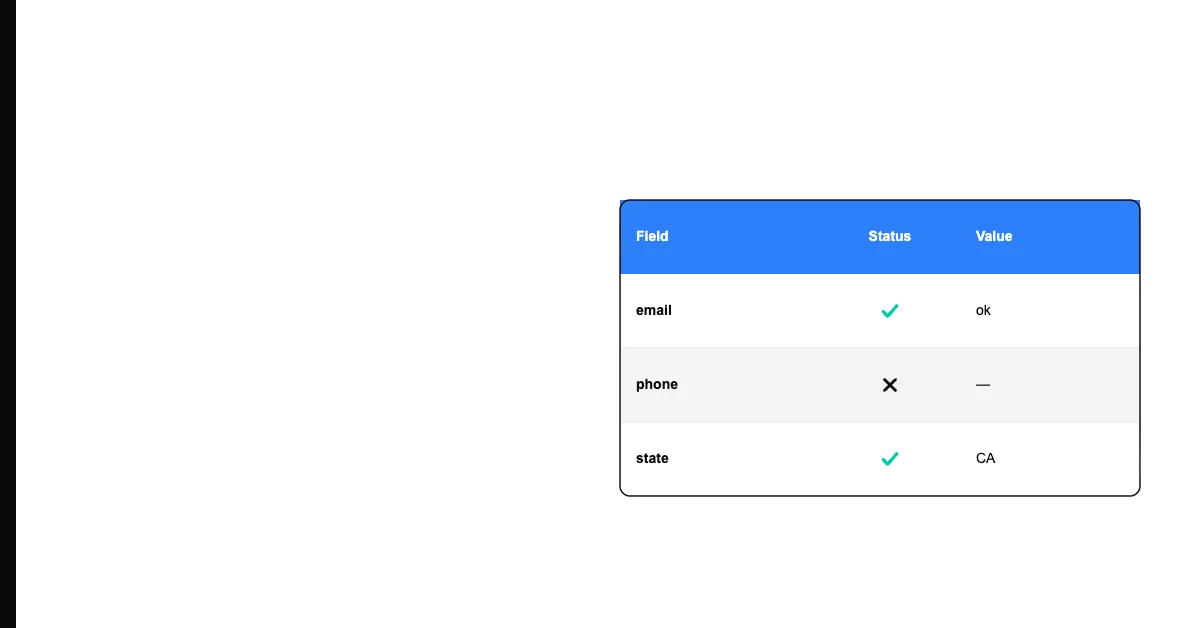
Rule 4: Validation at entry Build data validation into your forms. Required fields that can't be skipped. Date fields that reject impossible values. Phone fields that reject non-numeric entries. Catch errors at entry — not 3 months later in a report.
Building a Data Dictionary
Every data element your organization collects should be defined in a data dictionary:
- Field name
- Definition (what does this field mean?)
- Allowed values (especially for dropdowns — define the choices)
- Who enters it and when
- How it will be used in reports
A data dictionary makes training new staff faster and ensures that "client status" means the same thing to every program coordinator who enters it.
The Monthly Data Quality Review
Once per month, one person (data manager, program director, or operations staff) reviews a sample of new records:
- Are required fields complete?
- Are date ranges plausible?
- Are dropdown values from the approved list?
- Does the record make narrative sense?
A 30-minute monthly review catches systemic entry problems early. Quarterly or annual reviews let problems compound for months before anyone notices.