Tax Season Starts With Dirty Data
Every freelance accountant knows the feeling: a client hands you a year's worth of transaction data in a spreadsheet, and it's a mess. Vendor names spelled three different ways. Transaction dates in the wrong year. Categories that don't match the chart of accounts.
Before you start classifying, reconciling, or preparing returns, you need to know what you're working with. A 20-minute data quality check at the start of tax season saves hours of corrections later.
The Five Things to Check in Every Client Data File
1. Date Range Completeness
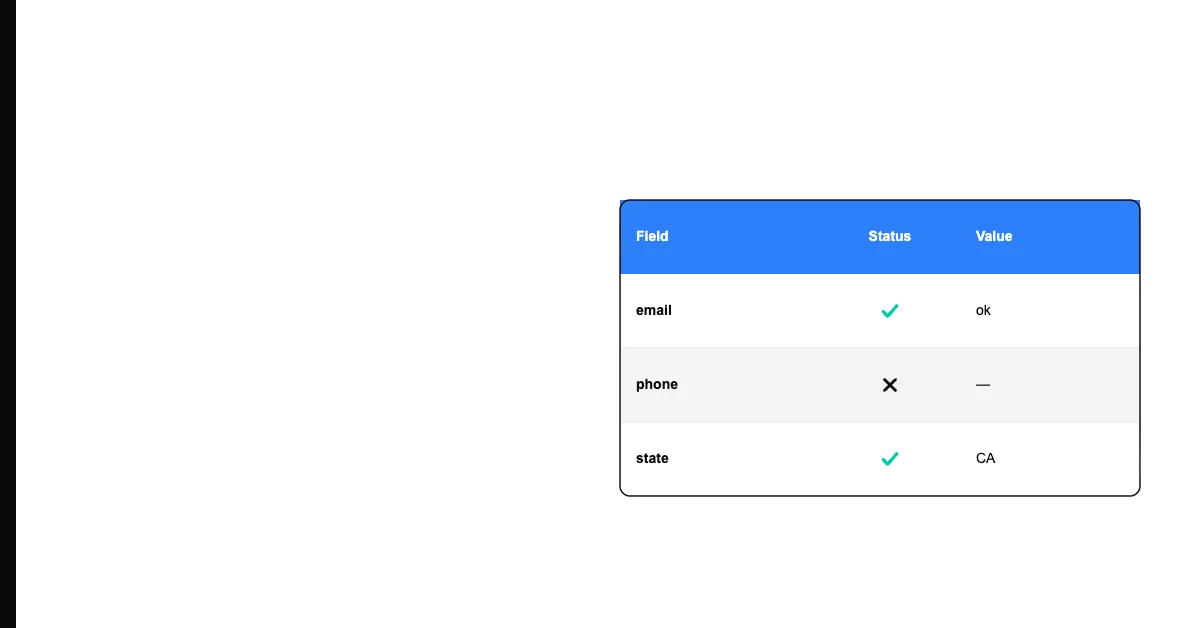
Sohovi profiles every column in your dataset for completeness and flags the exact rows where values are missing — free to try.
Confirm the file actually covers the full period. Ask: is January 1 through December 31 fully represented? Are there gaps — say, no transactions for three weeks in August? Gaps might mean missing data or a period the client didn't include.
Sort by date and check the first and last transaction. Run a month-by-month count to spot suspiciously empty months.
2. Category Consistency
Look at the category or account column. Count unique values. You might find: "Office Supplies", "office supplies", "Office supply", "Ofc Supplies" — all meaning the same thing but stored as four different values.
Inconsistent categories break any summary or pivot table you build. Fix them before you start analysis, not after.
3. Duplicate Transactions
Sohovi automatically finds every duplicate in your dataset — including near-matches — and shows you exactly which rows are affected.
Duplicates are especially dangerous in accounting. A $5,000 payment to a vendor recorded twice means overstated expenses and understated profit. Sort by amount and date, then scan for consecutive identical amounts to the same payee.
4. Missing Required Fields
Depending on what you're preparing, certain fields are mandatory: vendor name, amount, date, category. A cell that says "Unknown" or is blank in the Amount column needs to be resolved before you can use that row.
Run a COUNT on each critical column and compare to total rows. Any gap is a missing value.
5. Amounts That Don't Add Up
If the file has both line-item transactions and summary rows, verify that summary rows match the underlying detail. A summary showing $48,000 in Q1 revenue when the individual transactions sum to $51,000 is a problem.
Build a One-Page Client Data Report
After your check, create a simple summary:
- Total transactions reviewed
- Date range confirmed
- Issues found (with examples)
- Estimated time to resolve
Send this to the client before you start work. It sets expectations, gives you a basis to adjust your quote if the data is worse than expected, and documents that you flagged issues professionally.
The Bigger Picture
Data quality issues in financial data aren't just inconvenient — they can result in incorrect tax filings, missed deductions, or compliance problems. As the professional touching the data, you're accountable.
A systematic data quality check at intake is one of the clearest ways to demonstrate that you're a rigorous, professional accountant rather than someone who just runs numbers through a spreadsheet.