Nonprofits often have the tightest operating margins and the least technical capacity — which makes data quality problems disproportionately costly. A donor appeal sent to an outdated address. A major donor who's been contacted three times this month because they appear in three separate records. A grant report that relies on program participation data with missing fields.
These aren't minor inconveniences. For a development team running on limited staff, bad data wastes the budget that should be going toward the mission.
Where Nonprofit Data Quality Fails Most
Duplicate Donor Records
Duplicate records are the most common and most damaging data quality problem in nonprofit CRMs. They're created every time a donor gives through a different channel (online vs. check), every time a new staff member can't find an existing record and creates a new one, and every time a data import from an event or campaign isn't properly deduplicated against the existing database.
Sohovi automatically finds every duplicate in your dataset — including near-matches — and shows you exactly which rows are affected.
The consequences:
- Duplicate solicitations (embarrassing to major donors, wasteful for small donors)
- Split giving history (a donor's total lifetime giving is divided between two records, making them look like a smaller donor than they are)
- Wrong communication preferences applied (a donor who opted out of email appears to be opted in on one record)
Incomplete and Stale Contact Data
Nonprofit donor databases accumulate stale data because donors aren't prompted to update their information as often as, say, e-commerce customers. A donor who gave $5,000 five years ago and moved twice since then is still in the database at their old address.
Address-based appeal mailings to stale records waste printing and postage. Phone calls to wrong numbers waste staff time. Emails to abandoned addresses damage deliverability.
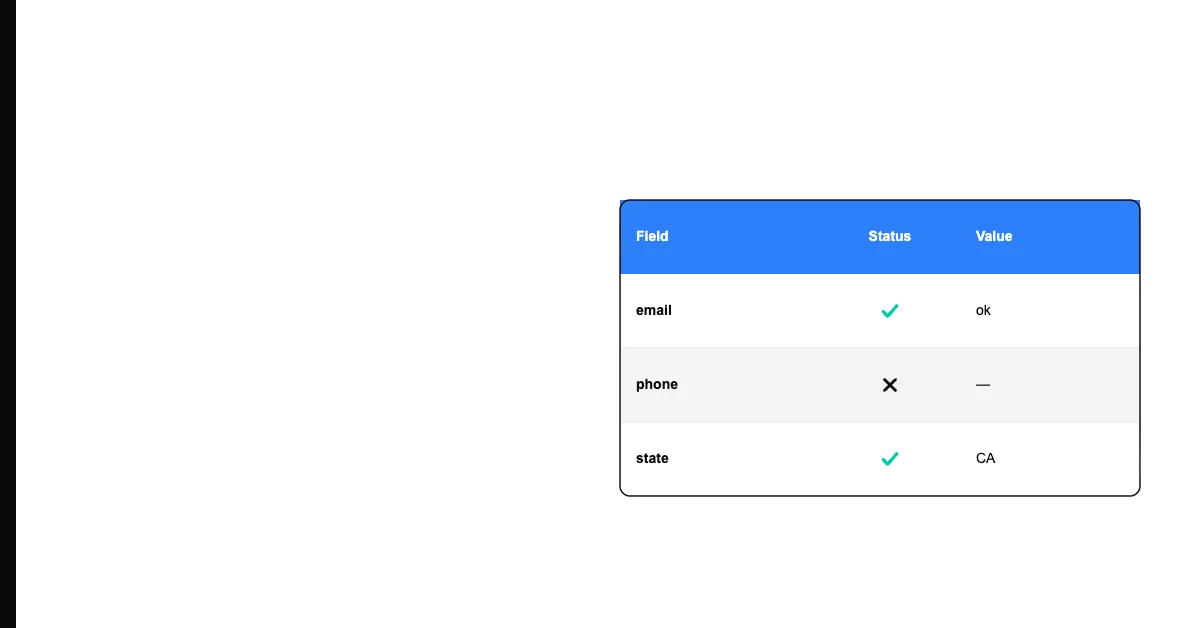
Sohovi validates your email list for invalid formats, duplicates, and missing fields before you send — protecting your sender reputation.
Grant and Program Data Gaps
Grant reporting requires complete, accurate data on program participants: numbers served, demographic breakdowns, outcome metrics. When program staff enter data inconsistently — different formats for the same field, missing required values, or data entered into the wrong field — the grant report requires hours of reconciliation and sometimes manual verification.
Practical Steps for Nonprofit Data Quality
1. Run a donor database deduplication audit. Export your donor contact list and run a deduplication check by email address, name/address combination, and phone number. Merge duplicate records before your next major appeal — and flag which giving history to preserve from each record.
2. Verify addresses before major direct mail campaigns. Before printing appeal letters, run your mailing list through an address verification process. Even a simple completeness check (does the record have a street address, city, state, and ZIP?) catches the most obvious unusable records before you spend on postage.
Sohovi profiles every column in your dataset for completeness and flags the exact rows where values are missing — free to try.
3. Set required fields for new donor record creation. In your CRM, require at minimum: first name, last name, and one contact method (email or mailing address). Optional fields are always optional — people don't fill them in. Required fields ensure you have enough information to contact the donor again.
4. Build a grant data completeness check into your reporting workflow. Before the end of each grant period, run a completeness check on the program participation data you'll need for the report. Missing data is far easier to collect from program staff before the grant period closes than after.
Sohovi can help you quickly audit a donor database CSV for duplicate records and completeness issues — free to try, no credit card, no data leaving your browser.
Frequently Asked Questions
Q: What are the most common data quality problems for nonprofits? Duplicate donor records, stale or incomplete contact information, and inconsistent program participation data for grant reporting are the most common data quality problems for nonprofits.
Q: How do duplicate donor records hurt nonprofit fundraising? Duplicate records split giving history, making donors appear less generous than they are. They cause double-solicitation, which is embarrassing to major donors and wasteful to small donors. They split communication preferences, so a donor who opted out may receive communications on a duplicate record.
Q: How does stale donor data affect nonprofit campaign performance? Stale addresses waste printing and postage costs on direct mail campaigns. Stale email addresses damage deliverability for email appeals. Stale phone numbers waste staff time on annual fund phonathons. For a resource-constrained nonprofit, this waste directly reduces dollars available for the mission.
Q: What nonprofit CRM data fields should always be required? At minimum: first name, last name, and one contact method (email or mailing address). For development purposes, adding gift source and communication preference opt-in/opt-out as required fields prevents the most costly errors in your donor communications.
Q: How does data quality affect nonprofit grant reporting? Grant reports require complete, accurate program data: participants served, demographic breakdowns, outcomes. When program staff enter data inconsistently, the grant report requires hours of reconciliation. Incomplete program data can put grant compliance at risk if the required metrics can't be accurately reported.
Q: How often should nonprofits audit their donor database? Before every major appeal or campaign, run a basic deduplication and stale address check. Annually, run a deeper audit that includes completeness checks on key donor fields and a review of communication preferences.
Q: Can small nonprofits maintain data quality without dedicated technical staff? Yes. The most important data quality tasks for nonprofits — deduplication, address verification, required field enforcement — don't require technical skills. A development associate with a spreadsheet and a consistent process can maintain adequate data quality for a small donor database.
Q: What is the ROI of donor database data quality for nonprofits? Direct mail campaigns for nonprofits typically cost $1–2 per piece when printing and postage are included. If 10% of your mailing list has bad addresses, you're spending $1,000–$2,000 per 10,000 pieces on solicitations that will never arrive. List hygiene that removes undeliverable addresses pays for itself in reduced waste on every subsequent campaign.
Q: How does duplicate donor data affect major gift fundraising? Major gift officers build relationships with donors over time, using giving history and engagement signals to identify upgrade potential. When a major donor's history is split between two records, the development officer sees a much smaller relationship than actually exists. Duplicate records can cause a major donor to be treated as a mid-level donor — and missed for a major gift conversation.
Q: What's the best way for a nonprofit to start improving data quality? Start with the donor database deduplication audit. Export the full contact list, check for duplicates by email and name/address combination, and merge the most obvious duplicates before your next major campaign. This single step typically has the highest immediate ROI of any data quality action for nonprofits.
For nonprofits, every dollar wasted on bad data is a dollar not going toward the mission. A donor database deduplication audit and a pre-campaign address verification take a few hours — and protect your next appeal budget from avoidable waste.