Accounting data quality means the financial records underlying every report, tax filing, and client statement are complete, accurate, consistent, and free of duplicates — because a financial statement built on bad data is itself bad, regardless of how correctly it was prepared.
Accountants and bookkeepers are trained to prepare financial statements accurately from the records they're given. But the records themselves are often the problem. A client who provides a QuickBooks export with duplicate transactions, miscoded expenses, or missing vendor details creates an accounting challenge that no amount of technical accounting skill can fully compensate for.
This post covers where financial record data quality fails most often in accounting work, and how accountants can build quality checks into their workflow.
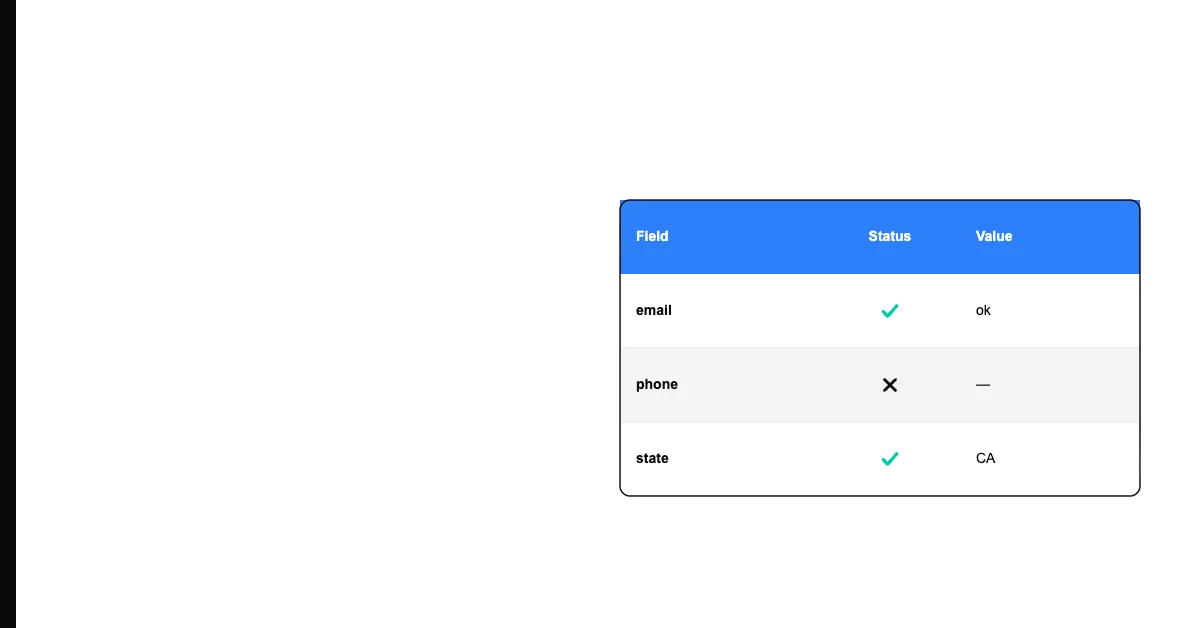
Sohovi applies your data quality rules automatically across the whole dataset and highlights every violation — so nothing slips through.
Where Accounting Data Quality Fails Most
Duplicate Transactions
Duplicate transactions are the most common and most disruptive financial data quality problem. They inflate both revenue and expense figures, making profitability analysis unreliable and financial statements wrong.
Duplicates enter accounting records through:
- Double-entry of the same invoice (once from email, once from an uploaded file)
- Bank import that includes transactions already manually entered
- Integration between a payment processor and accounting software that posts the same transaction twice
- A vendor payment entered by two people who didn't communicate
Duplicate transactions are particularly insidious because they're often not obvious in a transaction list — two transactions for the same amount on dates close together look like two separate legitimate transactions unless you know to look for them.
Sohovi automatically finds every duplicate in your dataset — including near-matches — and shows you exactly which rows are affected.
Miscoded Expenses and Revenue
Inconsistent use of account codes creates category-level reporting problems. When similar expenses are booked to different accounts (some consulting fees to "Professional Services", others to "Contractor Fees", others to "Misc. Expense"), financial statement comparisons across periods are unreliable and tax preparation requires manual reclassification.
For clients who track expenses by project or department, miscoded transactions produce wrong project profitability figures that affect management decisions and billing.
Incomplete Transaction Records
Missing vendor names, missing invoice references, and missing project codes create reconciliation problems and tax preparation challenges. An expense entry with the amount and date but no vendor name is technically recorded but practically incomplete — it can't be substantiated in an audit, can't be matched to a vendor payment, and can't be assigned to a client project.
Format Inconsistencies in Client-Provided Data
When clients provide transaction data in multiple formats — some from bank exports, some manually entered, some from a payment processor, some from a POS system — format inconsistencies accumulate. Date formats vary. Vendor name spellings vary. Amount formatting varies (some with "$" and commas, some without). These inconsistencies require manual reconciliation that adds hours to a cleanup or catch-up project.
Practical Steps for Accounting Data Quality
1. Run a duplicate transaction check before starting any client project. Before opening a client's books, run a duplicate detection check on their transaction records: same amount, same vendor, within a few days of each other. Identifying and removing duplicates before any analysis prevents errors from propagating into every report you produce.
2. Audit account code usage at project start. Run a report of all account codes used in the period you'll be working on. Look for: the same category split across multiple codes, codes used for things they're not designed for, and transactions coded to catch-all accounts like "Miscellaneous" that should have more specific codes.
3. Standardize format inconsistencies before analysis. When you receive data from multiple sources, standardize: date format (pick one), vendor name format (consistent capitalization, no abbreviation variants), and amount format (strip currency symbols and thousand-separators). This preparation step prevents silent errors in calculations and pivot table analysis.
4. Build a pre-close checklist. Before closing any accounting period, verify: all bank accounts are reconciled, all recurring entries have been posted, no obvious duplicate transactions exist, and all transactions above a materiality threshold have a vendor name and appropriate account code.
Sohovi can help you quickly audit a client's exported transaction file for duplicate amounts, missing vendor fields, and format inconsistencies — free to try, no data leaving your browser.
Frequently Asked Questions
Q: What is accounting data quality and why does it matter? Accounting data quality means the financial records underlying every report, tax filing, and statement are complete, accurate, consistent, and free of duplicates. Financial statements are only as accurate as the underlying records — accounting skill can't compensate for records that are themselves wrong.
Q: What are the most common data quality problems in accounting? Duplicate transactions, miscoded expenses (same category across multiple account codes), incomplete transaction records (missing vendor names, invoice references), and format inconsistencies in client-provided data are the most common accounting data quality problems.
Q: How do duplicate transactions affect financial statements? Duplicate transactions inflate both revenue and expense figures. A duplicated expense inflates your client's costs and understates profitability. A duplicated revenue transaction inflates revenue and can cause tax overpayment. When both duplicates fall in the same period, the income statement is wrong in both directions.
Q: How should accountants handle duplicate transactions discovered during a project? Document the duplicates, confirm they are genuine duplicates (same transaction entered twice, not two separate legitimate transactions for the same amount), remove or void the duplicate, and investigate how it entered the books — to prevent the same type of duplication recurring.
Q: What is expense miscoding and how does it affect accounting work? Expense miscoding is when similar expenses are booked to different account codes across different periods or by different people. It makes financial statement comparisons across periods unreliable, complicates tax preparation (expenses may need to be reclassified), and produces wrong project or department profitability figures.
Q: How can accountants reduce the time spent on client data quality problems? Build quality checks into the project start workflow: run a duplicate check before any analysis, audit account code usage before any reconciliation, and standardize format inconsistencies before building any reports. An hour of data quality work at project start typically saves three to five hours of correction work later.
Q: What format inconsistencies are most common in client-provided financial data? Date format variation (MM/DD/YYYY vs. YYYY-MM-DD vs. written months), amount formatting (with vs. without currency symbols and thousand separators), vendor name inconsistency (same vendor with different abbreviations or capitalizations), and account code format variations (with vs. without leading zeros) are the most common format inconsistencies in client financial data.
Q: How does data quality affect tax preparation for clients? Tax preparation depends on accurate, complete transaction records: correct amounts, correct categories, correct dates, and substantiated vendor names. Data quality problems — duplicates, miscoded expenses, missing vendor names — require additional reconciliation time and can produce incorrect tax positions if they go uncorrected.
Q: What is a pre-close checklist and how does it improve accounting data quality? A pre-close checklist is a set of data quality checks run before closing an accounting period: bank reconciliation completion, recurring entry confirmation, duplicate transaction review, and completeness check for transactions above a materiality threshold. It's the accounting equivalent of a pre-flight check — systematic verification before the period is locked.
Q: Can bookkeepers use data quality tools to improve their client work? Absolutely. Uploading a client's transaction export to a data quality tool like Sohovi before starting a project identifies the most common quality problems — duplicates, missing fields, format inconsistencies — in under a minute. This upfront investment prevents hours of mid-project corrections.
Financial statements are only as accurate as the records they're built from. Build data quality checks into your project start workflow — it protects your work product and reduces the hours spent on corrections.
If you want to run a quick quality check on a client's transaction file, Sohovi is free to try. Upload the CSV export, get an instant quality report — duplicates, missing fields, format issues — in under a minute. No credit card, no data leaving your browser.